
9 a.m. - 5 p.m. Thursday, October 15, 2026
University of Washington Husky Union Building | Seattle
South Ballroom 211 B
4001 E Stevens Way NE, Seattle, WA 98195
Padelford Parking Garage is the closet parking to the HUB and the cost is $5 hourly or $21.50 for the day.
See UW’s Plan Your Visit to the Husky Union Building website for information on public transit and maps.
Conference Agenda

Thank You to Our Sponsors!

Meet Our Speakers
Opening: 9 - 10 a.m.
Clean Energy Leaders Roundtable
 Tamara Kennedy, Executive Director, NW Energy Coalition
Tamara Kennedy joined the NW Energy Coalition as Executive Director in 2025. Her previous role was the Director of Economic Development and Global Trade for the Port of Portland. In that role, she advanced equitable development initiatives, impact program investments and global trade strategies for industry clusters in Advanced Manufacturing with a particular focus in ClimateTech and Mass Timber ecosystems.
Tamara currently serves on the Portland Clean Energy Fund Advisory Committee, PCC Foundation as a Trustee, and Vice Chair of the board of directors for the Clean Tech Alliance. She holds an MBA in Nonprofit Management from the University of Portland and a Bachelor’s degree in Communications. Tamara’s passion is to align human potential with positive community and environmental impact.
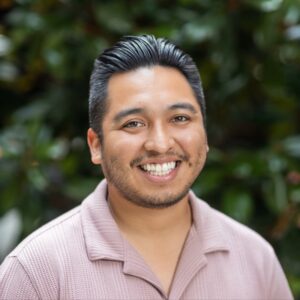 Guillermo Rogel Jr., Political Manager, Front and Centered
Guillermo is a member of the policy team at Front and Centered, working to advance the coalition’s legislative priorities. With a passion for education and advocacy, Guillermo has spent the past ten years collaborating with multiple statewide coalitions and organizations to lobby for causes rooted in social, racial, and environmental justice. As the lobbyist representing Front and Centered, Guillermo plays a pivotal role in educating lawmakers in Olympia about the urgent need to address climate change and invest in the well-being of those most affected by its impacts. Outside of the legislative world, Guillermo finds joy in going to concerts, playing tennis, and supporting our local Seattle football teams (Reign FC, Ballard FC, and Salmon Bay FC).
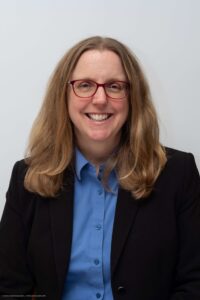 Becky Kelley, Executive Director, Clean Energy Transition Institute
Becky became CETI's Executive Director in August 2026. Becky is a respected clean energy and climate policy expert, strategist, and collaborative leader. From 2021 to 2025, she served as Senior Climate Advisor to Governor Jay Inslee of Washington, leading policy, budget, and coalition work on this priority issue for the Governor. In that role, Becky led the Governor’s efforts to pass 2021’s groundbreaking climate legislation, the Climate Commitment Act (CCA) and the Clean Fuel Standard. She supported implementation of the CCA and led legislative efforts to strengthen tribal consultation, improve the state’s clean energy siting processes, and expand clean energy workforce development. She also supported the Governor’s climate efforts regionally, nationally, and internationally, including through the Pacific Coast Collaborative, America Is All In, and US Climate Alliance coalitions.
Becky is the former president of the Washington Environmental Council (now Washington Conservation Action) where she worked for over two decades, leading the organization’s climate and clean energy policy efforts and many environmental advocacy campaigns and coalitions. Most recently, she consulted for the NW Energy Coalition on data center policy. Becky received her B.A. in International Studies from the Robert D. Clark Honors College at the University of Oregon.
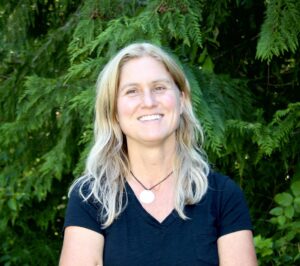 Andrea Axel, Executive Director, Spark Northwest
Andrea Axel has been the Executive Director of Spark Northwest for seven years. She is a firm believer in the power of community-led clean energy. She loves that Spark Northwest works on local implementation and also pushes for policy to meet systemic energy justice goals. Prior to working in clean energy, Andrea was a lawyer and a grant maker. She’s a proud graduate of the Just Lead Academy, which develops social justice advocacy skills. Andrea is a native of Oregon and long-time Seattle resident. On weekends you might find her hiking in the Cascades or sampling a fresh hops brew in Eastern Washington.
Session 1: 10:30 a.m. - 12 p.m.
Start With Trust: Ingredients for Successful Community-Led Clean Energy Implementation with Spark Northwest
Communities across the Pacific Northwest are embracing clean energy - but planning, funding, and installing these projects is where policy turns into reality. Join Spark Northwest for a highly interactive session exploring practical insights into what engaging communities, navigating multiple stakeholders, and aligning projects with local priorities looks like. Participants will work through real-world scenarios in small groups and engage in a collective discussion to reflect on where policy and regulatory decisions can accelerate community-led clean energy projects and how more inclusive clean energy policy starts on the ground in local communities.
 Veena Prasad, Program Director, Spark Northwest
Veena has more than 25 years of experience in various sectors and roles including engineering, project management, and nonprofit leadership. She has extensive experience engaging with communities and designing, and launching programs centered around the needs of communities. One of Veena’s priorities is to ensure that community engagement strategies are built into our program design and implementation. Veena holds a BSc in Electrical Engineering from Purdue University and an MBA from University of Washington Foster School of Business.
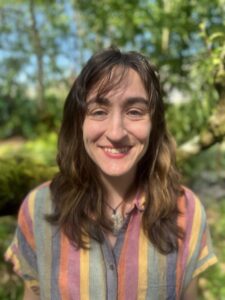 Erika Lundahl, Policy Manager, Spark Northwest
Erika joined the Spark Northwest team to accelerate the Just Transition to green energy. Raised in Oregon’s Willamette Valley, Erika is a storyteller, organizer, and fundraiser. She comes to Spark with over a decade of experience designing multimedia communications and fundraising campaigns to drive legislative and on-the-ground victories for environmental and social justice.
Before joining Spark, she helped craft award-winning books, museum exhibits and impact campaigns at nonprofit publisher Braided River, and worked on the IMAX film The Arctic: Our Last Great Wilderness. She is passionate about convening diverse stakeholders, local community leaders and visionary funders to drive solutions to our climate and biodiversity crisis and believes in the transformative power of community ownership. She serves on the boards of Washington financing co-op Salish Sea Cooperative Finance and also Conor Byrne Cooperative, a community-owned music venue in Seattle. In her spare time, she makes music and loves to hike, surf, and relish the beauty of the Pacific Northwest.
Session 2: 1:20-2:40 p.m.
Building Resilience Through Distributed Energy Resources with Clean Energy Transition Institute
We have much of the technology we need, but how can we best integrate it into the grid? Distributed energy resources (DERs), such as battery storage, distributed solar, and demand response, provide an opportunity to solve many of the challenges we have around local resilience and affordability. This panel will explore examples of policy and regulatory solutions to realize the opportunity that integrating DERs can provide to meeting our regions clean energy and equity goals.
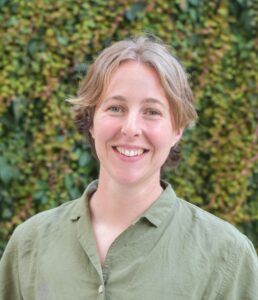 Jeanne Currie, Research Analyst, Clean Energy Transition Institute (Moderator)
Jeanne Currie joined CETI in May 2024 as a Research Analyst. Her portfolio includes the electricity grid, building decarbonization, and markets and transmission. She is involved in the Regional Engagement Committee for the Western Transmission Expansion Coalition (WestTEC) and has written for CETI about energy markets and the need for expanded transmission in the clean energy transition.
Jeanne provides research support for CETI’s SCALE 2030 project, which offers a blueprint for how Washington can get on the path to decarbonizing its building sector at the speed and scale that the state’s decarbonization targets require.
Prior to joining CETI, Jeanne was a graduate student planning intern and then policy analyst at Seattle City Light, researching and planning for new programs in energy efficiency, renewables, and affordability.
She received a Master of Public Administration from the University of Washington's Evans School in 2023, where she focused on energy systems and policy analysis. For her MPA, Jeanne completed a capstone project with the Washington Utilities and Transportation Commission that evaluated equity metrics used by investor-owned utilities to meet their legal obligations under the Clean Energy Transformation Act and Multi-Year Rate Plan Act.
Jeanne also holds a certificate in Nonprofit Management from the University of Washington and graduated from the University of British Columbia with a Bachelor of Science degree. She has been an AmeriCorps volunteer and Fulbright grantee and first worked in clean energy at Spark Northwest.
 Markus Virta, Co-Founder and President, Cascadia Renewables
Markus Virta is co-founder, President, and Managing Partner of Cascadia Renewables, a Pacific Northwest technical consultancy working at the intersection of clean energy policy, project development, and deployment. With over 16 years in the solar industry, he has worked in construction/installation, design, policy advocacy, and community-scale project development. He leads feasibility, planning, and owner-side work for solar, battery storage, and microgrid projects serving commercial/industrial, public, non-profit, and Tribal clients. His work centers on distribution system utilization, energy resilience, and delivering technical assistance to environmental justice communities. He leads microgrid feasibility, owner’s representation, and consulting for regional utilities and permitting authorities on commercial-scale battery storage strategy.
 Leslie Myers, Senior Clean Energy Product Manager, Puget Sound Energy
Leslie Myers is a Senior Clean Energy Product Manager at Puget Sound Energy, where she oversees a portfolio of voluntary clean energy programs designed to give customers more ways to participate in the clean energy transition, from reducing their carbon footprints to installing solar. Her experience at PSE also includes four years working in the field and leading the Customer Outreach team, connecting with small businesses and community stakeholders.
Before PSE, Leslie spent many years as a marketing and communications strategist across renewable energy, communications technology, and higher education fundraising at the University of Washington. Go Dawgs!
Leslie earned bachelor’s degrees in Women’s Studies and History from Portland State University and a Master of Communication from the University of Washington.
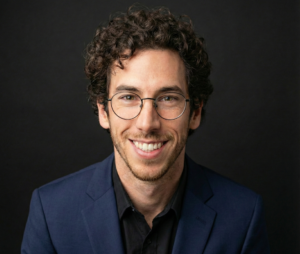 Grayson Shor, Founder and Executive Director, PNW Battery Collaborative
Grayson Shor is a global leader in battery and critical mineral circularity, with over a decade of experience scaling multi-million-dollar sustainability initiatives across five continents. As the Co-Founder and Chief Product Officer of BUCKSTOP, Grayson is at the forefront of the urban mining revolution. BUCKSTOP leverages a proprietary AI-driven appraisal engine and agentic workflows to “mine” enterprise asset lists, unlocking the residual value in the trillions of dollars of metals embedded in the U.S. economy. By streamlining industrial disposition, Grayson and the BUCKSTOP team are providing the essential data layer for a truly circular industrial economy.
Grayson further supports the energy industry as the Founder and Executive Director of the Pacific Northwest Battery Collaborative, the region’s largest network of battery professionals. Prior to these roles, he led Amazon Worldwide Operations’ circular economy and battery sustainability program, where he developed resource-efficient solutions for a workforce of 1.2 million across more than 20 countries.
Grayson’s career is defined by a unique blend of industry, government, and civil society leadership. A former U.S. diplomat and lead environmental intelligence briefer to Secretary John Kerry, he has contributed to over 200 U.S. government sustainability policy documents and managed a $20M+ climate-focused philanthropic grant portfolio.
A guest lecturer at Georgetown University on climate security and a former restaurant owner, Grayson brings a rare, “dirt-to-data” perspective to the energy transition. Raised on a ranch in Santa Barbara, he spends his free time wilderness backpacking and playing blues guitar.
Session 3: 3:40-5 p.m.
Data Centers and Energy Affordability with Front and Centered
Data center growth and rising energy costs are two rapidly evolving concerns in the energy space. Panelists in this session will explore where these two topics interact, highlight frontline perspectives, and share learnings from policy and regulatory efforts to ensure data center growth is regulated in a way that protects communities and does not exacerbate energy affordability challenges.
 Aqsa Mengal, Climate and Clean Energy Policy Lead, Front and Centered (Moderator)
Aqsa is a climate justice and environmental policy professional with experience advancing energy justice, community-centered adaptation, and international climate policy. She has worked on policy and advocacy that prioritize equity and justice for communities most impacted by environmental harms, both in the United States and across South Asia. As Energy Policy Lead at Front and Centered, she leads efforts to ensure that our energy systems and climate solutions deliver real and tangible benefits to frontline communities and tackle structural inequities as we advance a Just Transition.
 Jamie Hearn, Policy Counsel, Front and Centered (Moderator)
Jamie’s policy focus areas are land use, community resilience, and other planning work related to efforts to reduce greenhouse gas emissions and improve climate resilience. She has a background in environmental science and the intersections of environmental policy with tribal, land use, and administrative law. Her past experience includes working with frontline communities on developing climate justice advocacy campaigns and policies related to toxic remediation, flooding resilience, and air quality.

Jennifer Hill-Hart, Policy and Program Director, Oregon Citizens' Utility Board
As CUB’s Policy and Program Director, Jennifer provides leadership, support, and coordination to CUB’s program staff in our organizational advocacy. She represents CUB at the Oregon Public Utility Commission and the Oregon Legislature, as well as on statewide advisory boards, task forces, and councils related to utility regulatory matters. She leads and assists the CUB team in developing and implementing utility policy and regulatory advocacy to protect consumers and promote equity and fairness as Oregon transitions to a clean energy economy.
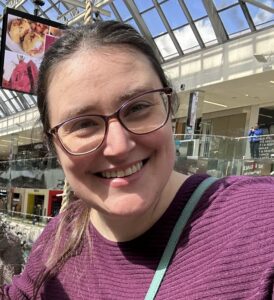 Shaylee Stokes, Director, The Energy Project
Shaylee Stokes (she/her) directs The Energy Project. The Energy Project (TEP) works with energy utilities, regulators, and other energy policy entities to center affordability & develop or expand bill assistance and weatherization programs for limited-income households in WA. The Energy Project focuses engagement on energy issues that have a material impact on limited-income and vulnerable populations. Shaylee was named as the Director of The Energy Project in September 2023. She previously worked for Hopelink, where she progressed through multiple roles within their Energy Assistance Programs, rising to the level of Senior Program Manager across 13 years with the organization. Shaylee’s background in direct service to underserved communities drives a passion for recognizing and removing the barriers and inequities limited-resource households face. She currently sits on the Governance Board & Executive Committee of the National Energy and Utility Affordability Coalition (NEUAC).
N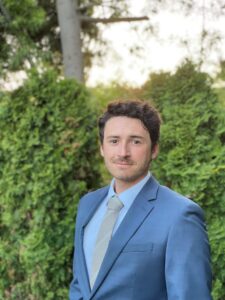 ico Wedekind, Associate Attorney, Earthjustice
Nico is an Associate Attorney in Earthjustice’s Northwest Regional Office. His work focuses on environmental justice, energy justice, salmon protection, and general policy work. Prior to joining Earthjustice, Nico was Policy Counsel for Front and Centered, a coalition of communities of color-led groups across Washington State who come together to advance equity, climate justice, environmental justice. In that role, Nico worked on the development of cumulative impacts legislation and regulations on equitable clean energy development and equitable reduction of pollution exposure. Prior to working for Front and Centered, Nico worked as the inaugural Diehl Clinical Fellow for the University of Washington Regulatory Environmental Law and Policy Clinic, where he focused on providing legal assistance to historically underrepresented communities in Washington State. In his free time, he enjoys cooking, music, skiing, mountain biking, surfing, and generally exploring as much of the Pacific Northwest as he can.
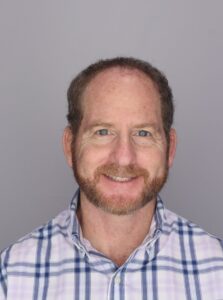
Derek Goldman, Policy Associate, NW Energy Coalition
Derek joined the Coalition in fall of 2024. Previously, he was the national field director and Northern Rockies representative with the Endangered Species Coalition, advocating on wildlife issues in the region. Derek spent more than a decade working as a campaign manager with M+R Strategic Services, advancing policy at the local, state and national level, on issues ranging from land and water conservation, energy and climate, to campaign finance reform, transportation, and more. At M+R, Derek successfully managed seven county-wide ballot issue campaigns, securing voter-approved funding for open space conservation, public schools, a new library, and expanded public transit service. Derek has a M.S. in Environmental Studies from the University of Montana and has worked as a river guide and a snowboard instructor. Derek lives in Missoula, Montana, where he enjoys adventuring on land, water and snow.
Thank You to Our Community Partners
Building Potential
Byrd Barr Place
Clean Energy Transition Institute
CleanTech Alliance
Climate Solutions
Community Energy Project
Elevate
Green Energy Institute at Lewis & Clark Law School
Opportunity Council
Oregon Citizens’ Utility Board
Oregon Solar + Storage Industries Association
Physicians for Social Responsibility Washington Chapter
Renewable Hydrogen Alliance
Solar Washington
Sustainable NorthwestWashington Solar Energy Industries Assoication
Washington State Community Action Partnership
Washington Conservation Action
Verde
Oregon Just Transition Alliance
Congratulations to our 2026 Awardees!
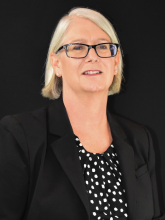 Ann Rendahl, Washington Utilities and Transportation Commission
Ann Rendahl was first appointed to serve as a commissioner of the Washington Utilities and Transportation Commission by Gov. Inslee in December 2014 for a six-year term that ended Jan. 1, 2021. Ann has been reappointed and confirmed to a second six-year term ending Jan. 1, 2027.
Ann serves as the President of the National Association of Regulatory Utility Commissioners, or NARUC, and serves as a member of the Executive Committee and the Board of Directors. Ann is also a member of the Committees on Water and Critical Infrastructure and was a prior chair of the Committee on Electricity.
Ann serves as a member of the Southwest Power Pool’s Markets+ States Committee and has served on the Body of State Regulators for the California ISO's Energy Imbalance Market. Ann also serves as a member of the Electric Power Research Institute's Advisory Council, the Advisory Council of the Center for Public Utilities at New Mexico State University, and the Advisory Board of the University of Missouri’s Financial Research Institute.
Before being appointed as a commissioner, Ann served as the Director of Policy and Legislation for the UTC. Before leading the UTC’s Policy and Legislative Affairs Section, she served as the Director of the Administrative Law Division, as an administrative law judge for the UTC, and as an assistant attorney general representing the UTC.
Ann is a graduate of Wellesley College. She received a master’s degree in Public Policy from the Goldman School of Public Policy at the University of California, Berkeley, and her law degree from UC Law San Francisco.
 Save Our wild Salmon (SOS) is a coalition of northwest and national conservation organizations, recreational and commercial fishing associations, clean energy and orca advocates, businesses, and individuals committed to protecting and restoring abundant, self-sustaining fishable populations of salmon and steelhead to the Columbia-Snake River Basin for the benefit of people and ecosystems.
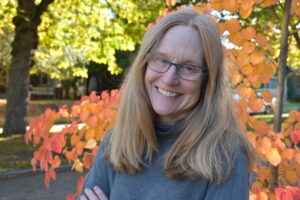 Eileen Quigley, Clean Energy Transition Institute
Eileen V. Quigley founded the Clean Energy Transition Institute (CETI) in 2018 to accelerate an equitable clean energy transition in the Northwest. She conceived and executed both the Northwest Deep Decarbonization Pathways and Net-Zero Northwest projects and led the efforts to produce the Washington 2021 State Energy Strategy, the Oregon Clean Energy Pathways analysis, the Washington Green Electrolytic Hydrogen Report, and the Oregon Energy Strategy.
Over the nearly two decades that Eileen worked to advance a clean energy economy throughout the Northwest, she researched a wide range of decarbonization solutions, published numerous papers, reports, and blogs, and spoke regularly about how to transition off of fossil fuels to clean energy.
Prior to founding CETI, Eileen spent seven years at Climate Solutions, first as Director of Strategic Innovation and ultimately as Deputy Director, where she oversaw programs that identified transition pathways to a low-carbon future for aviation, carbon sequestration, and the electricity grid and advanced clean energy solutions in cities and rural areas in Washington, Idaho, Oregon, and Montana.
She co-taught a 400-level course at Western Washington University on the Northwest Energy System Transition (2018 and 2019); guest lectured at Portland State University on climate policy (2018) and the University of Washington’s Evans School of Public Policy & Governance, School of Law, and Department of Communications on using the Internet for social change (1998-2006) and accelerating clean energy solutions in the Northwest (2010-2023).
A seasoned manager of for-profit and nonprofit businesses, Eileen served as Executive Director for three nonprofit organizations from 1988 to 1996 and 2006 to 2008. She ran RealNetworks’ Nonprofit Affairs Division from 1996 to 2003, helping nonprofit organizations use the Internet for social change. From 1983 to 1988, she was a magazine and newspaper journalist in Washington, DC and New York, NY, covering national politics and business.
Eileen was recruited to Seattle in 1988 to edit a quarterly journal of public policy, economics, and culture for the Pacific Northwest and Western Canada. She served as a civic leader from 1992 to 2010, sitting on numerous Puget Sound nonprofit arts, social service, journalism, civic, and environmental boards and taskforces.
She is currently on the boards of Renewable Northwest, the Northwest Energy Efficiency Alliance, and Washington Builds, as well as a member of the Seattle City Light Environmental Advisory Group. She was on the Stockholm Environment Institute-US Centre Board from 2016 to 2025, the Western Washington University Institute for Energy Studies Advisory Council from 2019 to 2024, and the University of Washington Clean Energy Institute’s Advisory Committee from 2014 to 2019.
Eileen received her Master of Science in Journalism from Columbia University in 1983 and her Bachelor of Arts in Literature from Yale University in 1980.
Aqsa Mengal, Front and Centered
Aqsa is a climate justice and environmental policy professional with experience advancing energy justice, community-centered adaptation, and international climate policy. She has worked on policy and advocacy that prioritize equity and justice for communities most impacted by environmental harms, both in the United States and across South Asia. As Energy Policy Lead at Front and Centered, she leads efforts to ensure that our energy systems and climate solutions deliver real and tangible benefits to frontline communities and tackle structural inequities as we advance a Just Transition.
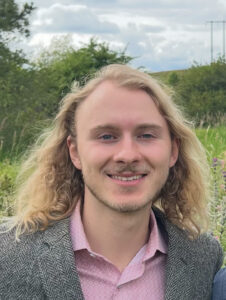 Nick Fitzmaurice, Montana Environmental Information Center
Nick Fitzmaurice is the Energy Transition Engineer at the Montana Environmental Information Center (MEIC). For over three years in this position, he has worked on energy issues across Montana to create the conditions for Montana's clean energy transition. This work includes state-wide organizing and education, advocacy around NorthWestern Energy’s decision-making processes and the Public Service Commission’s regulation of the utility, and lobbying on energy issues at the state legislature. Growing up in north central Washington, he developed a deep-rooted love for the natural world and the communities it nourishes. He has long been driven to preserve the environment, with particular dedication to mitigating global anthropogenic climate change through energy system transformation. Nick holds a BS in Industrial and Management Systems Engineering from Montana State University (MSU), where he also minored in Sustainability and Environmental Stewardship. Before joining MEIC, he worked at MSU's Office of Sustainability, in addition to a stretch modeling energy policy impacts in Washington, D.C. He currently serves as the Chair of the NW Energy Coalition's Montana Caucus.