

- This event has passed.
Register For the Northwest Transmission Summit
Join the NW Energy Coalition
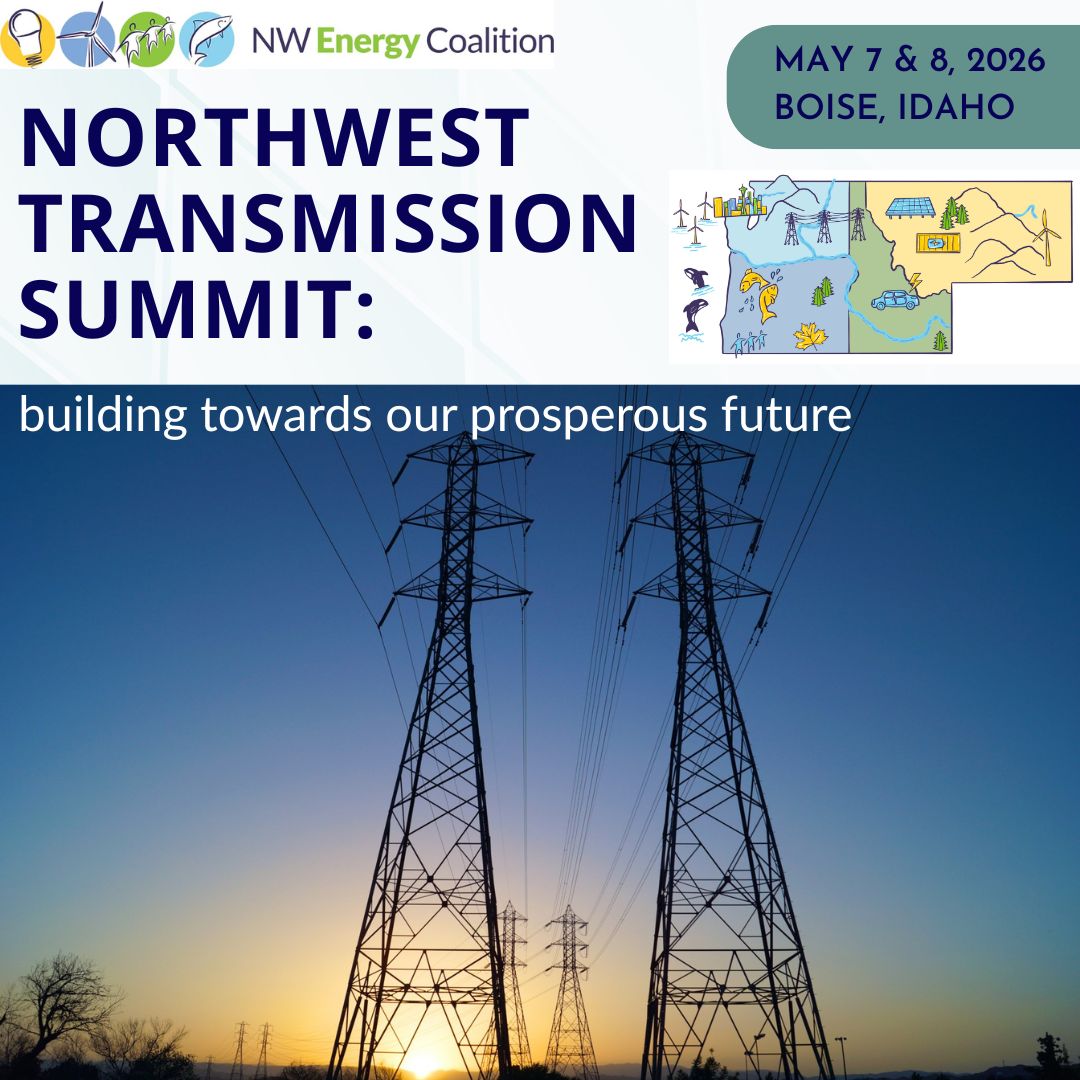
12pm-5pm Thursday May 7 & 9am-3pm Friday May 8
Boise Centre – Boise, Idaho
850 W. Front Street (Directions & Parking)
Spring 2026 Northwest Transmission Summit: building towards our prosperous future
Our region faces growing energy demands, changing climate patterns, and continued development of low-cost solar and wind power. We have a long history of interconnecting our region through a network of transmission lines to control costs, increase reliability, and integrate clean energy. As we reach the grid’s limits, it is time to reinforce and expand our system to meet our future needs. Come together to gain a shared understanding of the urgency of the need, identify key opportunities, and address historical barriers to site, pay for, and build new transmission resources while protecting community values.
Join us for a reception from 5pm-7pm following the main conference on Thursday May 7th at the Boise Centre.
See more details about the event and read more about our speakers here.
Thanks to our Sponsors!
If the ticket price is a barrier for you to attend, we have sponsorship, scholarship, and volunteer opportunities are available. Please contact elle@nwenergy.org for more info.
Member Meeting
NW Energy Coalition Members are encouraged to join us for the Spring NWEC Member Meeting on May 7 from 9-11am MT / 8-10 PT at The Nature Conservancy’s Boise office (a short walk from the Boise Centre), prior to the main event. There will be a hybrid option for the Member Meeting.
For questions contact Elle Gasperini, our Events & Membership Manager at elle@nwenergy.org
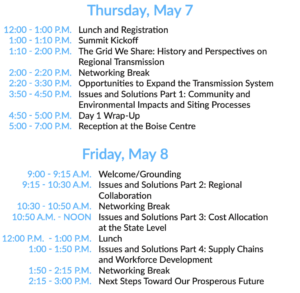
Summit Agenda:
Thursday May 7 (12pm-5pm)
Session 1: The Grid We Share: History and Perspectives on Regional Transmission
The Northwest shares a transmission grid, which has provided reliable service for decades. However, it is nearing its limits as our region continues to grow and respond to new technology, evolving resources, and changing weather. As we face the need to optimize and expand the grid, we also must address a legacy of impacts to our communities, Tribes, and environment, as well as consider who bears the cost. This session grounds the conference in a shared understanding of the history of our regional transmission grid, the necessity of expanding the grid, and the considerations that must be central to the discussions and process.
Moderator: Stephanie Lenhart – Boise State University
Panelists:
Jillian Hanson – The Nature Conservancy (TNC)
Brant Johnson – Grid United
Donald Williams – From the Light Consulting
Jamie Hearn – Front & Centered
Mike McArthur – Renewable Northwest
Session 2: Opportunities to expand the transmission system
Many opportunities exist to expand the grid to meet future needs. Panelists will share about the utility and regional plans to expand our regional grid around three key strategies: optimizing the current grid, increasing capacity along existing corridors, and a small set of new projects that will reinforce the system and access the lowest cost resources available to meet our energy demands.
Moderator: Shanna Brownstein – Grid Care
Panelists:
Casey Baker – GridLab
Hamody Hindi – Bonneville Power Administration (BPA)
Curtis Westhoff – Idaho Power
Kyle Unruh – Renewable Northwest
Session 3: Issues and Solutions Part 1: Community and Environmental Impacts & Siting Processes
Siting new transmission lines is where the rubber meets the road: balancing the need to expand our grid with impacts on communities whose lands and lives are impacted. The siting process is intended to identify and address these impacts while still resulting in new infrastructure builds. This session will review how the siting process works in each state, have panelists share from various stakeholder perspectives, and provide opportunity for the audience to share thoughts on how siting processes can continue to be improved.
Moderator: Aaron Menenberg – Renewable Northwest
Panelists:
Shannon Stewart – Invenergy
John Robison – Idaho Conservation League
Reuben Martinez – Affiliated Tribes of Northwest Indians
Jeff Hough – Bannock County Board of Commissioners
Friday May 8 (9am-3pm)
Session 1: Issues and Solutions Part 2: Regional Planning and Coordination
Transmission is a regional infrastructure need; however, it is largely planned and paid for at the state level in the West. As regional planning rises in importance, stakeholders across the West are developing new tools and processes to increase coordination. Hear from a panel of speakers engaged in regional planning about evolving forums for regional collaboration and opportunities to engage.
Moderator: George Lynch – Western Interstate Energy Board
Panelists:
Rich Glick – Gridworks
Caitlin Liotiris – Energy Strategies
Donald Williams – From the Light Consulting
Session 2: Issues and Solutions Part 3: How Costs and Benefits are Determined and Allocated at the State Level
Who pays for, and who benefits from, our regional transmission lines? In the Northwest, each state has similar, but meaningfully different processes and standards for allocating costs and benefits to local utility customers. A moderated panel of utility commissioners will explore the differences between each state and help identify opportunities to increase coordination to ensure fair and accurate allocation of costs and benefits.
Moderator: Megan Decker – Staircase Advisory
Panelists:
John Hammond – Idaho Public Utility Commission
Les Perkins – Oregon Public Utility Commission
Brian Rybarik – Washington Utilities and Transportation Commission
Session 3: Issues and Solutions Part 4: Workforce and Construction
Even if the political and financing challenges to building transmission were addressed, do we have access to the right people and materials required to “put steel in the ground?” This session will investigate the key supply chain and workforce development challenges that face the region, and we’ll hear from speakers engaged in creative opportunities to address them.
Moderator: Kate French – BlueGreen Alliance
Panelists:
Jake Pollack – Strategic Energy Innovation (SEI)
Erich Orth – Bonneville Power Administration (BPA)
Jason Hudson – IBEW 77
Session 4: Next Steps to Achieve Our Prosperous Future
How can we move forward to build upon our shared transmission system, meet our growing needs, and address the real impacts on communities and the environment? In this concluding session, we will summarize the information, perspectives, and potential solutions that came out of the conference sessions, solicit additional audience ideas on how to move forward, and identify opportunities for further engagement.
Moderator: Ben Otto – NW Energy Coalition