
July 2026 Newsletter
Help Plan the Northwest’s Energy Future
Amid rising temperatures, lower snowpack, high-tech growth, and clean energy acceleration, we are in a pivotal moment for the Northwest’s energy future. This summer and fall, we have an opportunity to share our voices to ensure we choose clean, affordable, and reliable resources that protect our communities and environment. As the 9th Northwest Regional Power Plan takes shape, your participation can help build a smarter, fairer energy system for the decades to come.
Read more: https://nwenergy.org/9th-northwest-regional-power-plan/
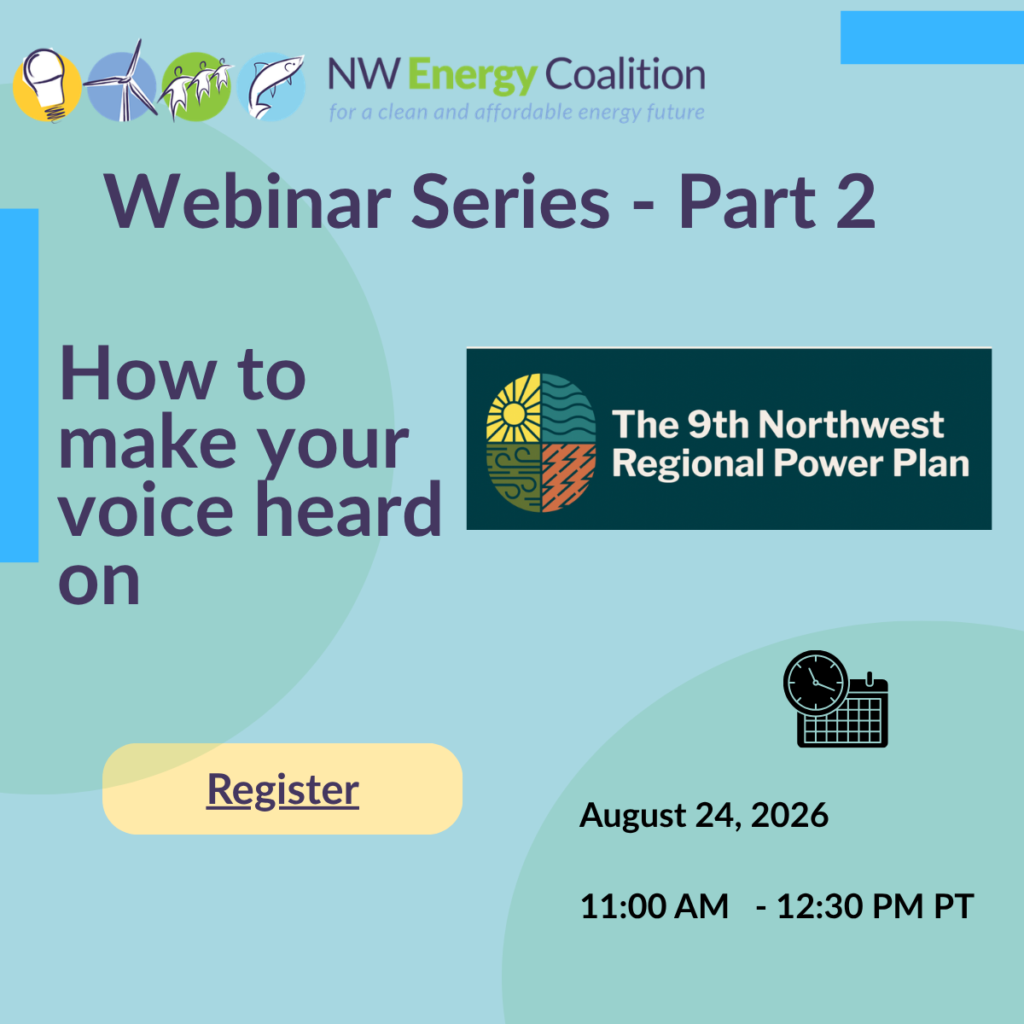
Webinar: Make Your Voice Heard on the 9th Northwest Regional Power Plan
Join us for the second webinar in our series this summer on the 9th Power Plan. We’ll go through the results of the plan and guide you through the process of submitting your comments online and in-person.
Missed our first webinar? Watch it here!
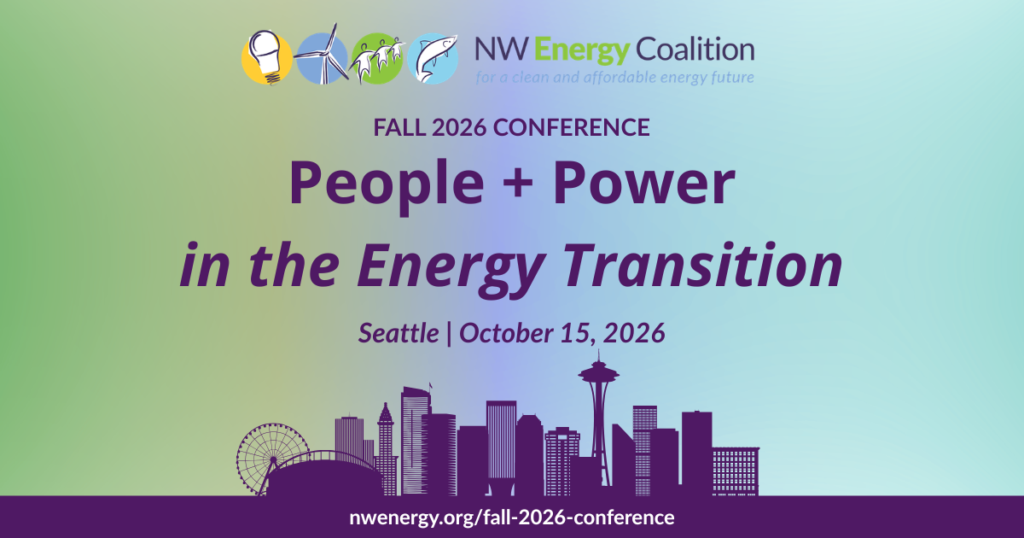
2026 Fall Conference in Seattle: People and Power in the Energy Transition
8 a.m. – 5 p.m. October 15, 2026
University of Washington Husky Union Building | Seattle, Washington
Come together with regional energy experts, advocates, utility leaders, business representatives, and policymakers from across WA, OR, ID, and MT to pause and reflect on where we are in the energy transition and how we continue to move towards a clean, affordable, and equitable energy system.
Conference sessions will focus on:
- Centering frontline voices in policymaking around data centers and large loads
- Reflecting on the successes and lessons from community clean energy development and implementation
- Exploring how clean energy technologies can help meet the needs of communities
Get inspired by innovative ideas and connect with others who are creating community-driven solutions.
The conference will be held from 9 a.m. – 5 p.m. followed by a reception from 5 p.m. to 7 p.m.
Federal and Regional Updates
Welcome Travis Kavulla, New BPA Administrator
Congratulations Administrator Kavulla! We are excited for the expertise, energy and new ideas he brings to the Bonneville Power Administration (BPA).
“BPA faces several challenges as the Northwest looks to meet rising energy demands, leverage our clean energy resources, ensure affordable power bills, and protect our iconic salmon runs,” said Tamara Kennedy, NWEC Executive Director. “We look forward to the deep experience and fresh thinking Mr. Kavulla brings to this role.”
Washington
UTC Performance-Based Ratemaking Rulemaking Updates (Docket 210590)
The Utilities and Transportation Commission (UTC) hosted a hybrid workshop on July 14 to assess and discuss performance-based ratemaking (PBR) metrics utilities have reported throughout 2025, to provide an overview of a new Regulatory Assessment completed in collaboration with RMI, and to detail next steps for the rulemaking.
The new Regulatory Assessment is a straw proposal for how the UTC can more effectively implement PBR. It includes approximately 30 recommendations such as:
- Maintain the current multi-year rate plan framework in the near term while continuing to evaluate its effectiveness and potential improvements
- Keep revenue decoupling and make adjustments to carrying costs, effective dates, and utility alignment
- Eliminate several trackers and move the costs into base rates
- Comments on the Regulatory Assessment, metrics reporting and targets, and the UTC’s upcoming PBR website refresh are due in docket 210590by October 9.
UTC Transportation Electrification Policy Statement Updates (Docket 160799)
The UTC is working to update its 2017 Transportation Electrification (TE) Policy Statement and recently released the first two sections (of seven) of its Policy Statement Regarding Electric Vehicle Charging Infrastructure.
These sections describe the current state of TE in Washington and provide regulated utilities with guidance on forecasting and modeling to enable proactive distribution investments. NWEC applauds the Commission for the clear and proactive guidance provided so far and looks forward to continuing to evaluate the Policy Statement.
Subsequent sections will be released throughout 2026 and will cover rate design, rate recovery, reliability, equity, and TE Plans.
Oregon
IOU Wildfire Mitigation Plans Approved
Oregon’s Public Utility Commission approved all three investor-owned electric utilities’ (IOU) 2026–2028 Wildfire Mitigation Plans on June 25, adopting Staff’s recommendations for each plan. This marks an important milestone as the first multi-year IOU wildfire mitigation plans in Oregon and reflects months of dedicated advocacy from NWEC, Oregon Citizens’ Utility Board, Community Energy Project, and Verde, who submitted multiple rounds of comments throughout the review process. As Advocates, we are encouraged to see PUC Staff incorporate many of our recommendations, demonstrating the value of sustained stakeholder engagement and thoughtful collaboration. These improvements include making the plans more readable and accessible, strengthening customer awareness and utility protocols around fast-trip outages caused by sensitive power line settings, increasing transparency around cost allocation, improving utility reporting on community outreach efforts, encouraging utilities to include home hardening and defensible space resources at community events, and creating informal “office hours” to give PUC Staff, stakeholders, and utilities a dedicated space to discuss the plans and implementation challenges.
This outcome also highlights the growing recognition that wildfire mitigation planning must balance system safety with affordability, transparency, and community impacts. Advocates worked diligently to ensure these plans not only reduce wildfire risk but also better reflect the experiences and needs of Oregon customers and address catastrophic wildfires. That work continues in UM 2340, where the development of risk-spend efficiency assessments will further mature to better capture the co-benefits of wildfire mitigation investments while providing greater scrutiny of utility spending. Equally important, the proceeding will continue to address the impacts of wildfire mitigation-related outages on customers and communities, ensuring that reliability, equity, and cost-effectiveness remain central to future decisionmaking.
Here are the three PUC Orders adopting Staff’s recommendations.
Montana
NorthWestern Energy’s Integrated Resource Plan—Public Comment Period Closes July 28, PSC Public Meetings Scheduled
Every three years, NorthWestern Energy (Montana’s largest Investor-owned utility) must produce an Integrated Resource Plan (IRP)—a long term planning study that outlines different options for how the utility will meet its customers’ power needs over the next 20 years. It includes the forecasting of future electricity demand as well as an evaluation of how it will use (or develop) energy resources to meet that demand. On January 13, NorthWestern Energy (NWE) released its draft 2026 IRP to the public, and the utility is now accepting comments on the draft as part of its own (pre-regulatory) process.
This year’s IRP is particularly important due to three recent and potentially game-changing occurrences across Montana’s electric service landscape.
First, NWE recently announced a proposed merger with Black Hills Energy—a South Dakota-based, regional utility company. This is only the second time in a quarter century that a major utility merger has been proposed in Montana. NWEC is examining this merger closely for potential impacts on clean energy resource development and energy affordability.
Secondly, NorthWestern recently acquired almost 600 MW of Colstrip—the aging and polluting coal-fired power plant in eastern Montana—making it the majority owner of the plant. Almost immediately, NWE filed documents with FERC to transfer the 370 MW Puget Sound Energy portion into a new, unregulated merchant company. Their stated intent is to sell power from this share of the plant outside of the regulatory structure, likely to a new large load customer.
And thirdly (speaking of large loads), NWE has announced intentions to provide 1,400 megawatts (MW) of power to several new data centers proposed in Montana. For perspective, that’s nearly twice as much power as its average load in the entire state. NWEC is deeply involved in the emerging issue of data center development in Montana, its implications on residential rates and water resources.
So, while a lot is at stake this planning cycle, unfortunately NorthWestern’s draft IRP has numerous deficiencies:
- It fails to consider climate-altering greenhouse gas pollution;
- It overvalues fossil fuel generation resources, while undervaluing low-cost renewables like wind, solar and battery storage;
- Its goals for achieving energy savings through conservation and energy efficiency programs are anemic, at best;
- It proposes extremely expensive nuclear power as the eventual replacement for Colstrip, while not accounting for the full cost of plant construction and its impact on customers.
NWEC has submitted extensive comments to NorthWestern on its IRP. Now that the plan has been submitted to the Montana PSC, the public comment period runs through July 28, with two hearings scheduled in Helena (with Zoom options) for July 21 and July 23. Interested parties can submit a written comment via email to: pschelp@mt.gov. For detailed information on how to view and comment on the IRP, check out the links in the PSC’s news release.
Idaho
Podcast: Ideas for Solving Idaho’s Energy Problems
Senior Policy Associate Ben Otto was recently on The Ranch podcast! He chatted with host Matt Todd about how we can plan for increasing energy usage in Idaho while improving energy efficiency and keeping bills affordable for customers.
NWEC in the News
DOE appoints Travis Kavulla to lead BPA (RTO Insider)
Stakeholders urge new BPA leader remain focused (RTO Insider)
New BPA leader must find balance between modernization, conservation (The Seattle Times)
Data centers should be regulated separately by the PSC, coalition argues (The Daily Montanan)
We are hiring! NWEC is seeking a Data Center Policy Associate to join the Coalition team and work with us to advance policy action that addresses the opportunities and challenges for the energy system, environment, and communities associated with the rapid growth of data centers.
This position is a limited duration, two-year position with the possibility to extend based on funding availability. This position is primarily remote but must be based in the Pacific Northwest with a strong preference for Washington State. The position may require some travel to Olympia during legislative sessions, and occasional regional travel.
NWEC Staff Summer Updates
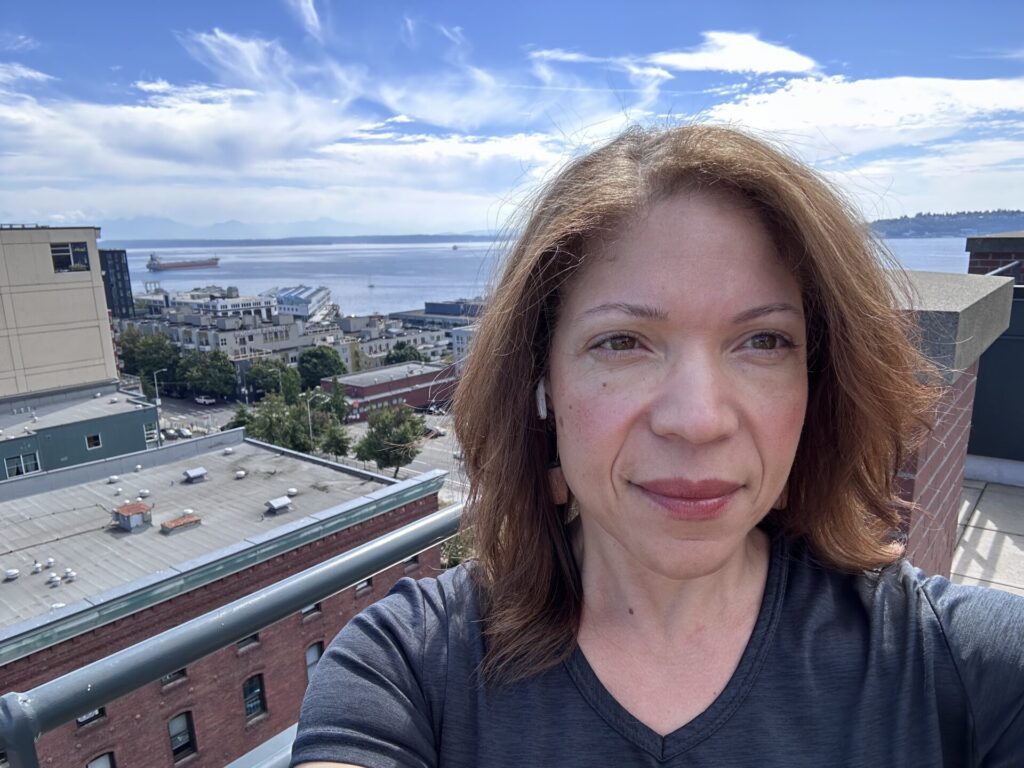
Executive Director Tamara Kennedy moved to Seattle! 🎉 She is excited to be closer to our downtown Seattle office.
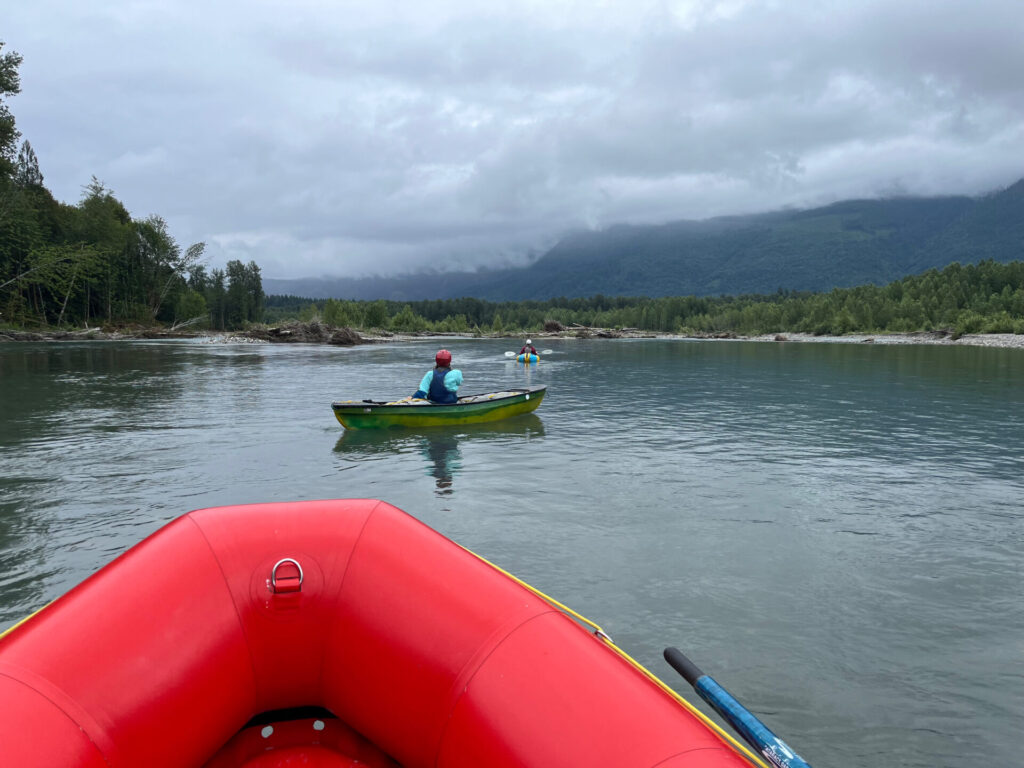
Events and Membership Manager Elle Gasperini went canoeing on the Sauk River.
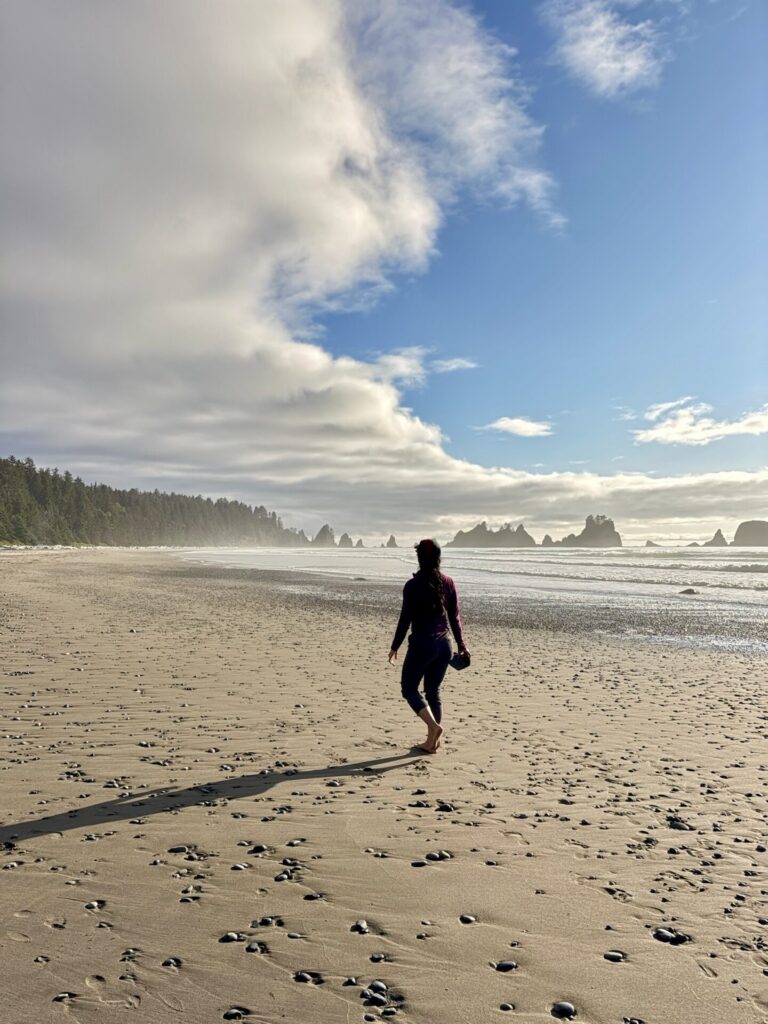
Senior Policy Associate Charlee Thompson went backpacking for the first time! Shi-Shi Beach (Makah Indian Reservation) was the perfect first experience. Her favorite part was exploring tidepools and waking up to the sounds of the ocean.

Policy Associate Alessandra de la Torre and her loved ones floated down the Wood River in Klamath County. The headwaters emanate from a large natural spring, and the icy-clear waters shine a beautiful aqua blue. It was an amazing and grounding experience.