
February 2026 Newsletter
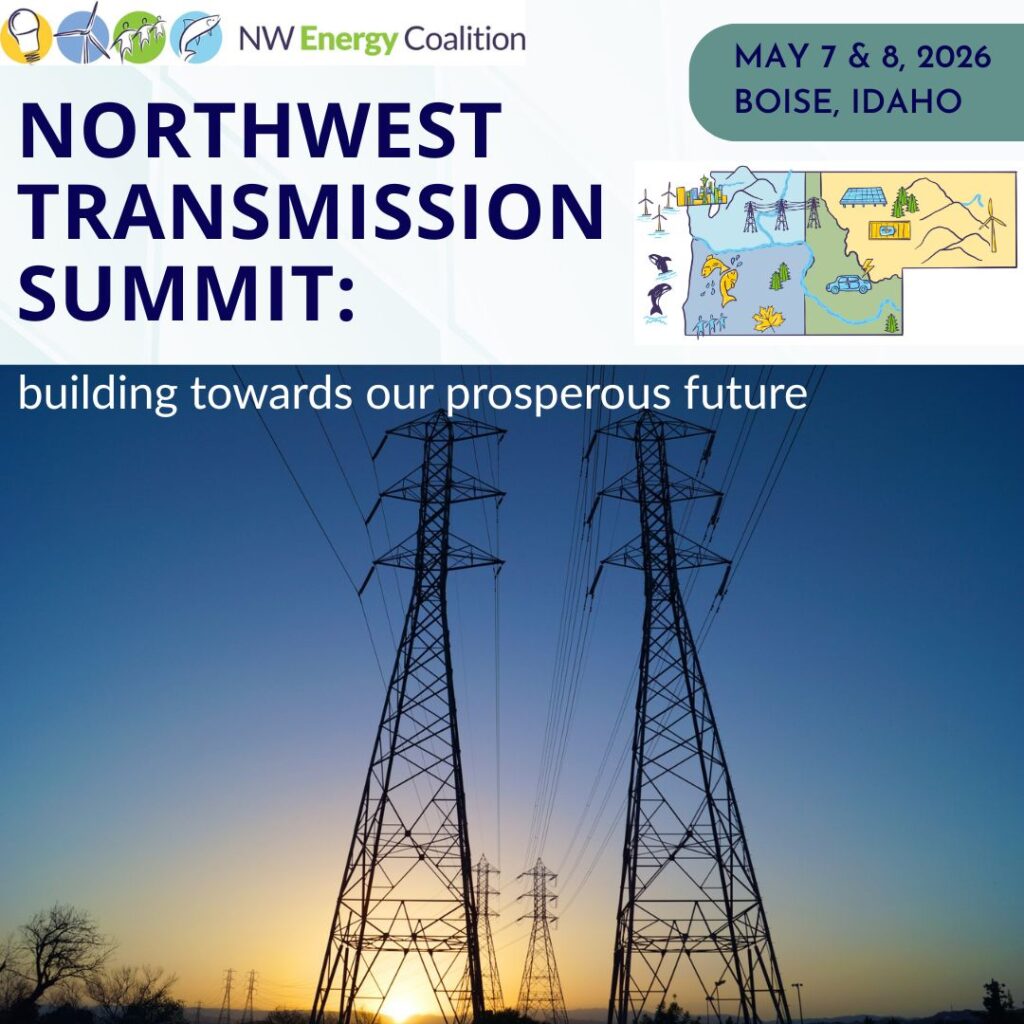
SAVE THE DATE: Northwest Transmission Summit
Join us May 7 & 8 in Boise, Idaho to discuss how we can reinforce and expand our transmission system to meet our region’s needs and build toward our prosperous future.
Federal and Regional Updates
With other public interest groups, we are challenging the Department of Energy’s illegal emergency order forcing Washington’s last coal plant to operate past its planned retirement date.
Read our joint op-ed with Climate Solutions and Washington Conservation Action in The Seattle Times and more about the order in The New York Times.
Join us in speaking up for salmon and a strong regionally supported Fish & Wildlife Program
The Northwest Power and Conservation Council (NPCC) is updating its 5-year Fish and Wildlife Program – a regional plan for mitigating harm to endangered native fish affected by hydropower operations on the Columbia and Snake rivers.
With the Resilient Columbia Basin Agreement abandoned and continued efforts to weaken the Endangered Species Act, the NPCC 2026 Fish and Wildlife Program is the best path to mitigate further harm to fish from hydropower operations in the Columbia and Snake rivers and make actionable progress towards recovery goals. We are working with our partners at Save Our Wild Salmon and the Columbia Snake River Campaign to encourage participation in this process.
Submit your comments by March 2 to help ensure that the final plan:
- Includes elevated “spill” over the dams through August 31 to help protect outmigrating juvenile salmon and steelhead.
- Emphasizes holding Bonneville Power Administration accountable to its obligation to protect and enhance all fisheries impacted by the hydro system.
- Acknowledges Lower Snake River dam breaching as a necessary measure.
The Fish & Wildlife amendment is the first part of the NW Council’s five-year planning process. The second part will come this summer when the Council releases the 9th Power Plan for public comment. This is a great opportunity to urge NPCC to chart a course towards affordable, efficient, and reliable energy that also protects and restores abundant fish populations.
Washington
2026 Legislative Session Updates
The 2026 Legislative Session is in full swing! This “short” session runs through March 12. We are tracking and collaborating on bills related to data centers, wildfire, affordability, distributed energy resources, the Clean Energy Transformation Act, and more. Keep an eye out for our weekly emails that list opportunities to testify and follow along. If you have any questions, please reach out to charlee@nwenergy.org.
Our work on the Governor’s Data Center Workgroup, and after has led to a couple of bills that are now making their way through the legislature. Driven by rapidly growing energy demand for data centers in our region, tech industry load could add the equivalent of an additional 2-4 Seattles to the grid by 2030. In the face of this unprecedented growth, we need to protect ratepayers, grid reliability and the environment. Two data center bills would do that:
- The main bill, HB 2515 / SB 6171, will help protect affordability and reliability for consumers and will help ensure that data center companies are being transparent and are prioritizing new clean energy. HB 2515 made it through House committees and passed the House Floor on February 14. While still a strong bill, a few important pieces of the bill were lost through the process and we will be working to see if we can restore those on the Senate side.
- The second bill, SB 5982 / HB 2245, will ensure that Washington’s clean electricity law, CETA, applies to all electricity used by data centers. That bill passed through Senate committees and passed the Senate Floor on February 11.
The two bills were also selected as one of the Environmental Priorities Coalition’s (EPC) 2026 Priorities, which means that a larger group of environmental organizations in the state are aligned in support of the bills. Here is the EPC’s one-pager that has more details on the contents of the bills. You can also read more about them in The Seattle Times and Axios.
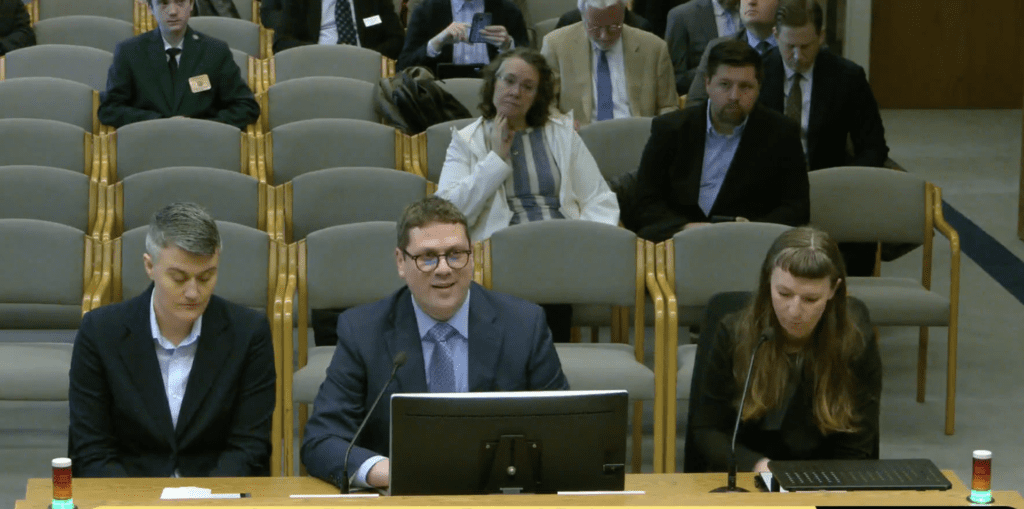
Caitlin Krenn, Climate and Clean Energy Director at Washington Conservation Action, Zachariah Baker, NWEC Regional and State Policy Director, and Leah Missik, Washington Legislative Director at Climate Solutions, testifying in support of SB 6171 in Olympia. Linda Garcia and Jeff DeLuca from the Washington State Community Action Partnership pictured in the row behind the speakers also testified. The companion bill in the House – HB 2515 – became the vehicle for the bill and passed the House Floor on Feb. 14.
Oregon
Energy Justice Leaders End-of-Year Celebration
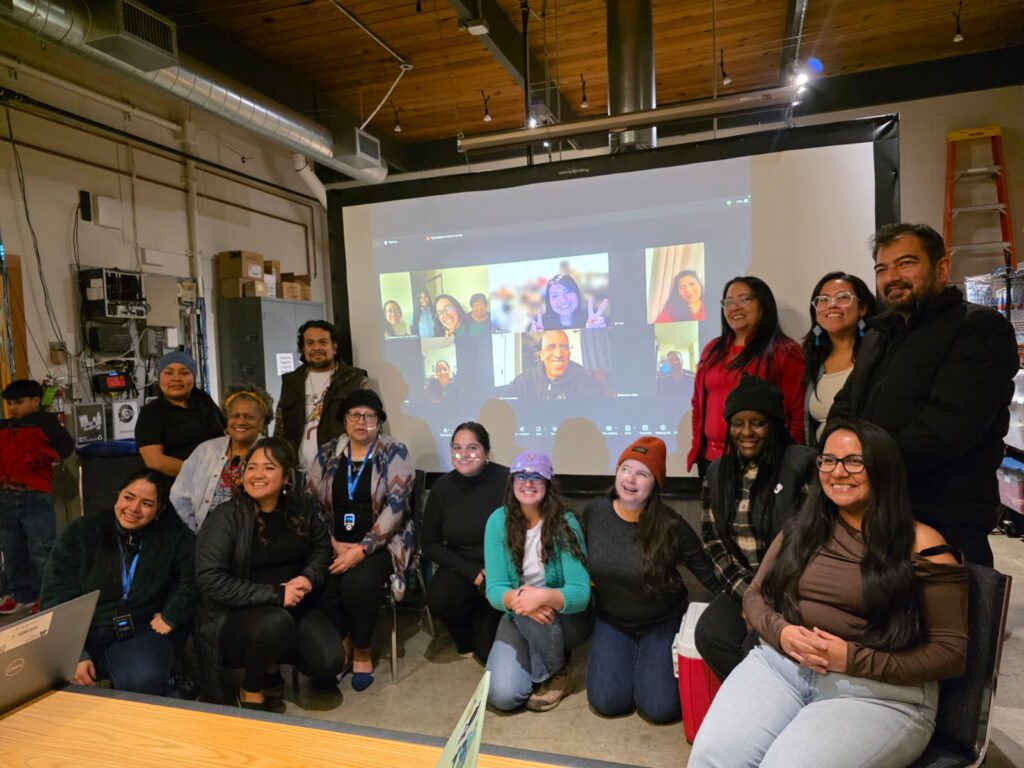
At the end of January, we celebrated the completion of the third year of the Energy Justice Leadership Program virtually and in person in Portland and Talent.
NWEC Policy Associate Alessandra de la Torre was able to join participants in Talent, and shared carne asada and tamales made by one of the EJ leaders.
“It was beautiful to hear about what participants loved the most and learned from the program as well as how to continue to improve it,” de la Torre said.

Oregon Legislative Session Underway
The Oregon Legislature kicked-off the 2026 “short” session earlier this month. The session runs through March 8. NWEC is not leading bills this session, but supporting partners in their efforts.
Montana
NorthWestern Energy Releases Draft 2026 Integrated Resource Plan
Every three years, NorthWestern Energy (Montana’s largest Investor-owned utility) must produce an Integrated Resource Plan (IRP)—a long term planning study that outlines different options for how the utility will meet its customers’ power needs over the next 20 years. It includes the forecasting of future electricity demand as well as an evaluation of how it will use (or develop) energy resources to meet that demand. On January 13, NorthWestern Energy (NWE) released its draft 2026 IRP to the public, and the utility is now accepting comments on the draft as part of its own (pre-regulatory) process.
This year’s IRP is particularly important due to three recent and potentially game-changing occurrences across Montana’s electric service landscape.
First, NWE recently announced a proposed merger with Black Hills Energy—a South Dakota-based, regional utility company. This is only the second time in a quarter century that a major utility merger has been proposed in Montana. NWEC is examining this merger closely for potential impacts on clean energy resource development and energy affordability.
Secondly, NorthWestern recently acquired almost 600 MW of Colstrip—the aging and polluting coal-fired power plant in eastern Montana—making it the majority owner of the plant. Almost immediately, NWE filed documents with FERC to transfer the 370 MW Puget Sound Energy portion into a new, unregulated merchant company. Their stated intent is to sell power from this share of the plant outside of the regulatory structure, likely to a new large load customer.
And thirdly (speaking of large loads), NWE has announced intentions to provide 1,400 megawatts (MW) of power to several new data centers proposed in Montana. For perspective, that’s nearly twice as much power as its average load in the entire state. NWEC is deeply involved in the emerging issue of data center development in Montana, its implications on residential rates and water resources.
So, while a lot is at stake this planning cycle, unfortunately NorthWestern’s draft IRP has numerous deficiencies:
- It fails to consider climate-altering greenhouse gas pollution;
- It overvalues fossil fuel generation resources, while undervaluing low-cost renewables like wind, solar and battery storage;
- Its goals for achieving energy savings through conservation and energy efficiency programs are anemic, at best;
- It proposes extremely expensive nuclear power as the eventual replacement for Colstrip, while not accounting for the full cost of plant construction and its impact on customers.
NWEC is reviewing the IRP in greater detail, and we will be providing comments in the coming weeks. The public comment period remains open until March 12, after which NWE will submit its plan to the Montana Public Service Commission for official regulatory review and approval. We encourage all interested stakeholders to provide input during these public processes and to tell NorthWestern Energy that it must do a better job of investing in and providing clean, affordable energy to its customers.
Idaho
Idaho Power’s Plans to Address Load Growth
Growing energy demands due to new large loads is the hot topic in energy planning today. Whether it’s data centers for artificial intelligence, booming populations, or electrification to protect our climate, demands for new energy are growing across the region. As we look at state-level actions to address this issue, Idaho Power provides an example of a regulatory structure to help ensure growth pays for growth.
New large customers are subject to Idaho Power’s Large Load Tariff that defines the costs and requirements for taking electric service. The public tariff setting out the prices the customer will pay and the terms of taking service is a transparent process to ensure the entity takes service on par with other customers. New customers must also comply with “Rule H” which ensures the new entity pays its share of the wires, poles, and substations they require. When it comes to planning generation and transmission to meet new demands, Idaho Power only includes customers who have a meaningful commitment to actually interconnect. This approach avoids overbuilding the system for customers who never arrive and thereby shifts costs onto local customers.
This Idaho approach is one way to address new large loads, and as mentioned above, we are leading the effort in Washington to pass state-wide legislation to address data center loads. We will continue to use all of our tools and opportunities to address the issue across the region.
Idaho PUC Reviewing Wildfire Management Plans
NWEC efforts to address increasing utility wildfire liability and costs continue. Each state has a different approach to the same two issues: how to ensure utilities are proactively planning to protect energy infrastructure and how to address a utility’s liability for wildfire damages. The Idaho Public Utilities Commission has initiated its first review of utility plans that, if approved and followed, should address these issues.
NWEC Policy Associate Alessandra de la Torre has engaged in most Wildfire Management Plans in the region, assessing the protections for public interests and reviewing utility plans to ensure cost effective investments. NWEC is recommending best practices discovered in other plans and techniques to ensure customers are protected from the impacts of utility-caused wildfires. Two key areas we are exploring are how to determine whether a utility investment is a cost-effective approach to reduce wildfire risks and how utilities can provide customers with local solutions when service is interrupted.
Join us in shaping a brighter energy future for people, salmon, and the climate—give to NWEC now and help advance affordable and equitable clean energy across the Northwest.