
April 2026 Newsletter
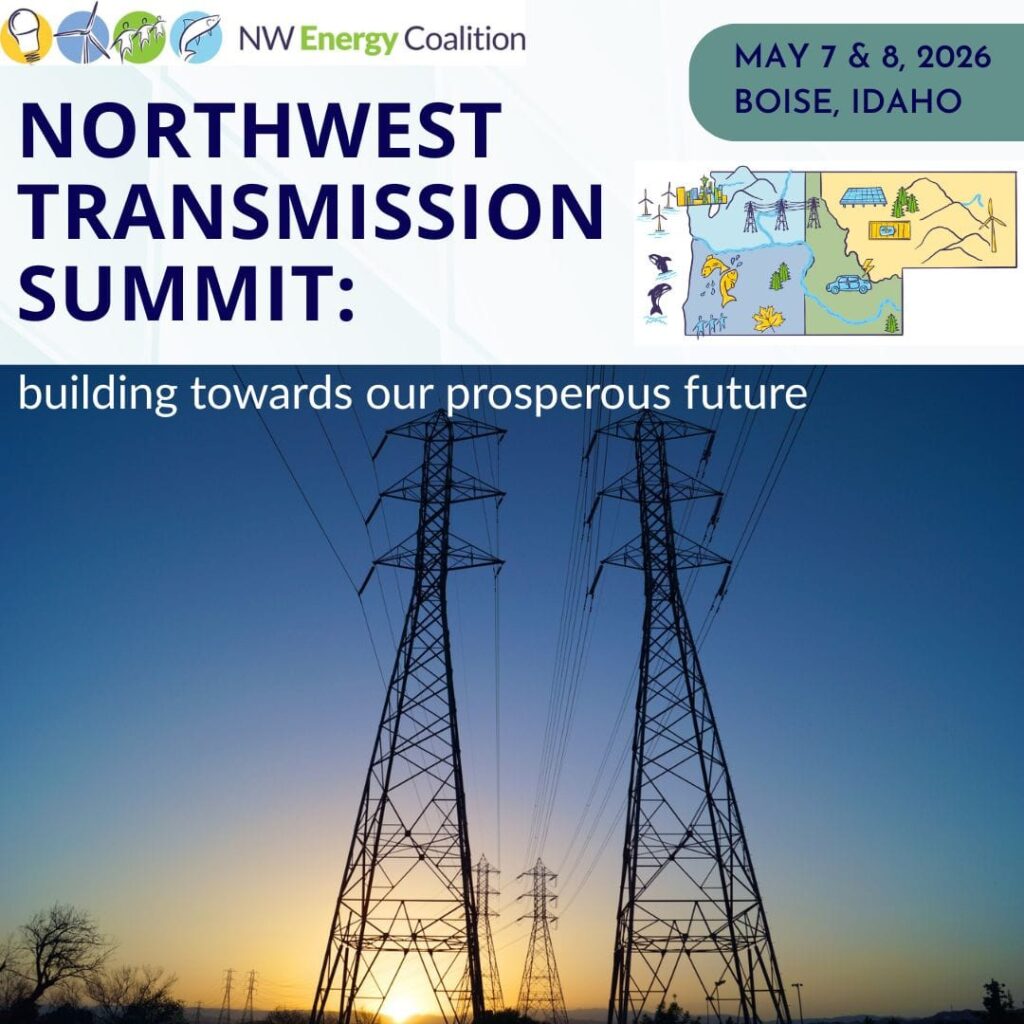
Northwest Transmission Summit
Join us May 7-8 in Boise, Idaho to discuss how we can reinforce and expand our
transmission system to meet our region’s needs and build toward our prosperous
future.
Montana Regional Connectivity Study
To encourage an informed discussion about transmission options in the Northwest, NWEC and our partner organizations commissioned Energy Strategies and Montara Mountain Energy to analyze potential pathways for delivering as much as 12,000 MW of new energy from Montana to the grid by 2035, while minimizing impacts on people and landscapes.
We are advocating for a new forward-looking, community first approach to transmission planning—one that seeks to engage with stakeholders and communities early in the planning process, to identify needs, concerns, opportunities and benefits right from the start. This study is a tool to begin important and necessary conversations to achieve the goal of a safe, reliable and efficient electricity grid that can provide access to the lowest cost energy resources while increasing grid reliability and economic development opportunities for Montana.
New NWEC Members
Welcome to our new members: Engineers for a Sustainable Future, Greenlight America, MeterHome, and The Nature Conservancy!

Federal and Regional Updates
Court Orders Emergency Protections for Columbia Basin Salmon after Federal Deal Collapses
At the end of February, a federal judge in Oregon granted critical emergency measures to protect endangered salmon and steelhead, which will provide a vital lifeline after the federal government unilaterally ended the Resilient Columbia Basin Agreement last summer.
Read more from OPB, The Seattle Times, and Underscore News.
Washington
What happened in the 2026 legislative session?
The short 2026 Legislative Session ended on March 12. NWEC tracked over 80 bills and engaged on about 20 bills in Olympia and virtually. Thank you to everyone who engaged with us, followed along, and pushed affordable and reliable clean energy advocacy forward!
Regional & State Policy Director, Zach Baker, led the state’s first big legislative push on data center regulation in two pairs of bills (HB 2515/SB 6171 and HB 2245/SB 5982). NWEC staff, members, and partners pushed many impactful bills through the finish line, including but not limited to:
- SB 5982, closing data center Clean Energy Transformation Act (CETA) loopholes
- HB 1903, creating a state bill assistance program
- HB 2367, regulating the Centralia coal plant
- HB 2338, expanding community-scale weatherization
- SB 6200, granting renters cooling access
- SB 6355, establishing a transmission authority
- HB 1960, changing the tax structure for large wind and solar projects
What’s Next?
CETA Education. As we see mounting challenges ahead of 2030 (e.g., transmission, resource adequacy, increasing energy bills) and recognize that fewer legislators have historical knowledge on CETA, it will be important to educate legislators and the public on the purpose of CETA in the interim.
Data Centers. NWEC will continue to lead stakeholder engagement and help look for additional bill sponsors in the interim.
We expect to see work continue on data centers, utility wildfire liability, affordability, and CETA in the 2027 long session. Read more from the Environmental Priorities Coalition. We will share more
information on the bills that passed and lessons we learned this session in an
upcoming blog—stay tuned!
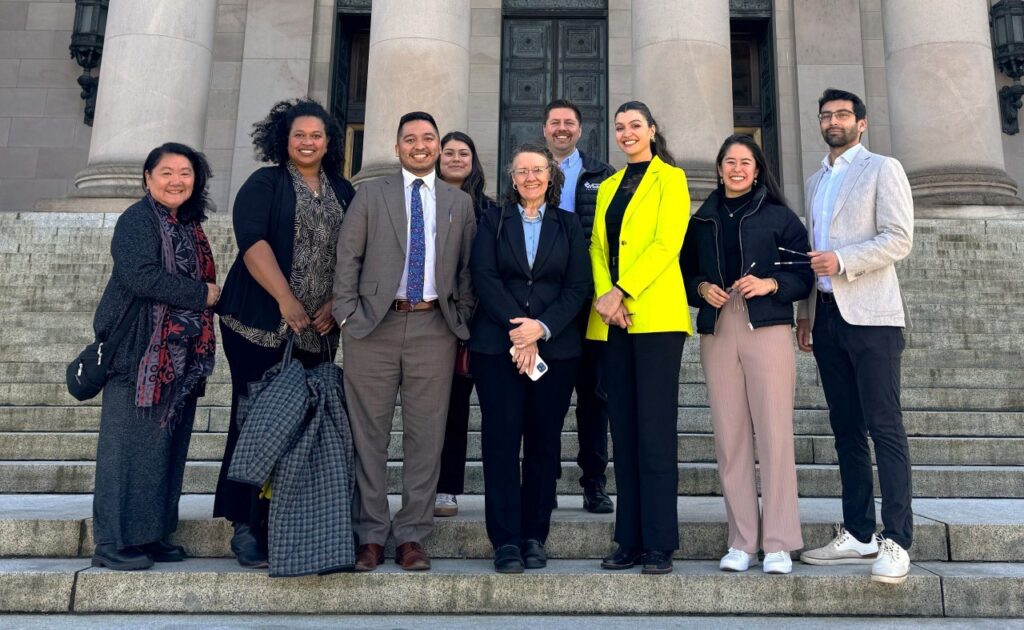
Supporters of HB 1903 from Front and Centered, Washington State Community Action Partnership, NW Energy Coalition, and Franklin PUD with Rep. Sharlett Mena on the Capitol steps in Olympia. Led by NWEC partner Front and Centered and Rep. Mena, HB 1903 establishes a statewide monthly energy bill discount program that will supplement existing assistance programs and create a partnership between the State Department of Commerce and utilities to more equitably deliver energy assistance. The program will be funded by the Climate Commitment Act and is expected to gradually grow as additional funding becomes available. NWEC worked closely with our partners to offer policy expertise and advocate for this bill, and it is a significant step toward reducing household energy burden and keeping bills more affordable.
Montana
NWEC and allies challenge PSC’s decision to keep data center information secret
On March 12, NW Energy Coalition joined member groups and allies in filing a challenge to the protective order NorthWestern Energy received with regard to its dealings with proposed data centers. The groups had previously filed a complaint at the MT Public Service Commission, arguing that the utility needed
to comply with state law and seek Commission approval prior to supplying power to new large loads in Montana. But NorthWestern has denied that the statute is applicable, and it has refused to publicly disclose the details surrounding three prospective new data centers, for which it has signed letters
of intent to provide electric service. Combined, the new data would account for additional electric demand of 1,400 MW—twice the size of NorthWestern’s entire statewide average electric load. Needless to say, a increase in electric service of that magnitude raises serious questions about grid reliability, infrastructure costs and affordability for Montana’s residential and commercial electric customers. We hope the Commission will reverse course and rescind its prior order allowing the utility to redact and
withhold this important information from the public.
Read more in The Daily Montanan.
Idaho
As Idaho faces rapid load growth across all customer types, the issue of who pays for new infrastructure and power needs is increasingly important. A primary way to address this issue is through the part of the utility rate-making process known as “cost of service” which allocates costs to the customer groups that are causing the increases. As part of settling Idaho Power’s recent general rate case, NWEC worked with our allies at Clean Energy Opportunities for Idaho and the City of Boise to cause a special docket focused on revising the cost of service method. NWEC recently filed initial feedback to Idaho Power that recommended some key improvements regarding the costs for transmission lines and new power plants. If adopted, these improvements should shift costs away from residential and small business customers and back onto the very large users whose demand contributes to overall system needs. NWEC will then build upon these cost allocation methods to create electric rates that will encourage more flexible use by all customers. Our goal is to enable growth that fits within the existing system and mitigate the need for additional infrastructure.
Idaho Power also recently filed plans to build hundreds of megawatts of new gas plants to meet peak energy demands beginning in 2029. These rising demands are not just data centers, rather every part of Idaho continues to grow as people move in, businesses develop, and Micron builds more memory chips. NWEC is reviewing the filings to determine if these forecasted peak loads are realistic and identify opportunities to address needs though more flexible customers and more battery storage to avoid adding additional fossil fuel generation to the mix.
NWEC in the News
Big tech took down new data center regulations, WA lawmaker says (Seattle Times)
NW environmental groups ask court to overturn Centralia order (Clearing Up)
Washington’s State’s data center regulation bill fails following pushback from tech industry (GeekWire)
Energy watchdogs: Data center protective order is unconstitutional (Missoula Current)
Judge orders spill at Northwest dams to aid salmon, despite energy concern (RTO Insider)
Next generation geothermal needs more than a technology revolution (Canary Media)