
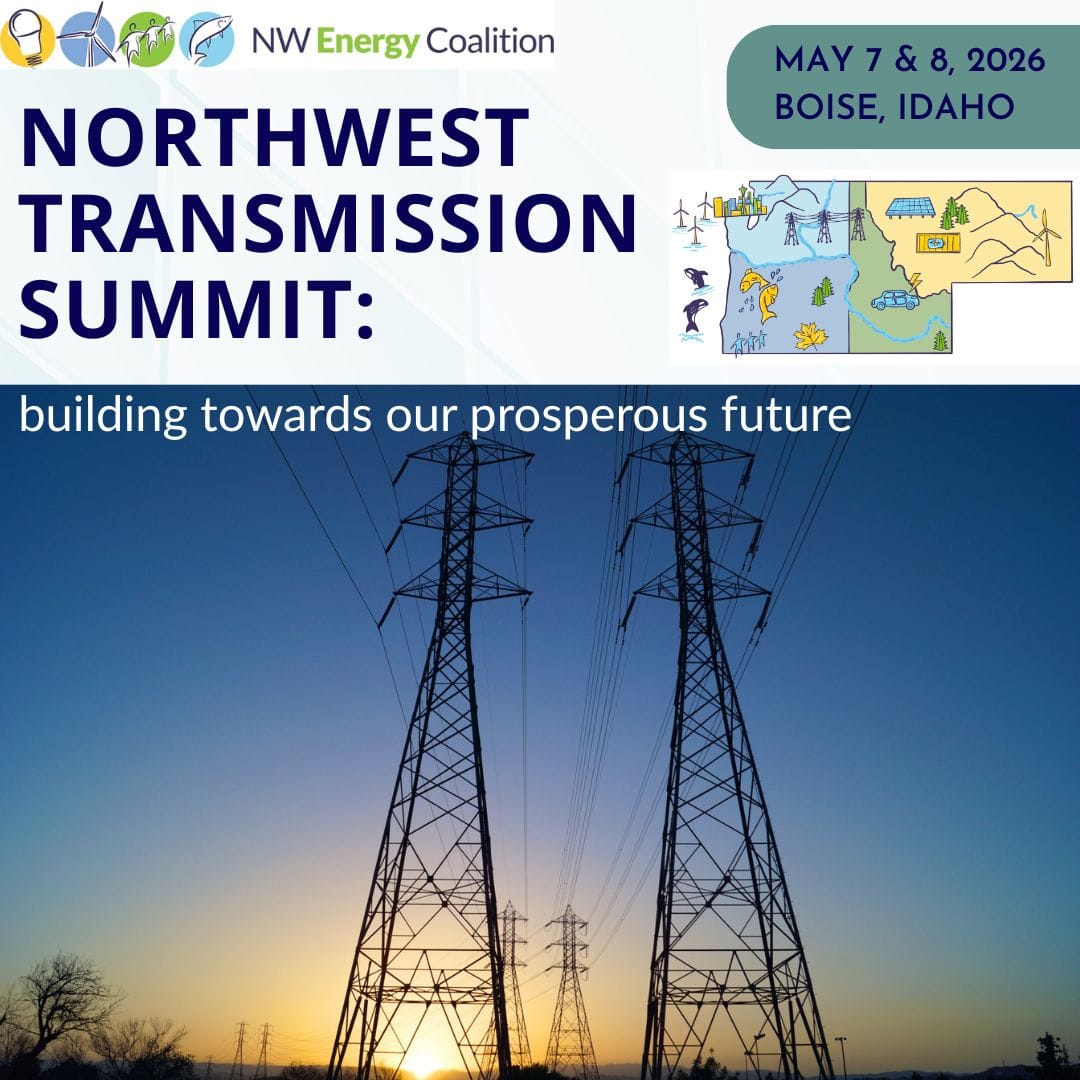
12 p.m. - 5 p.m. Thursday, May 7 and 9 a.m. - 3 p.m. Friday, May 8
Boise Centre | Boise, Idaho
850 W. Front Street (Directions & Parking)
Summit Agenda

Thank You to Our Sponsors!

Meet Our 2026 Northwest Transmission Summit Speakers
Thursday, May 7
Session 1 (1:10-2 p.m.)
The Grid We Share: History and Perspectives on Regional Transmission
The Northwest shares a transmission grid, which has provided reliable service for decades. However, it is nearing its limits as our region continues to grow and respond to new technology, evolving resources, and changing weather. As we face the need to optimize and expand the grid, we also must address a legacy of impacts to our communities, Tribes, and environment, as well as consider who bears the cost. This session grounds the conference in a shared understanding of the history of our regional transmission grid, the necessity of expanding the grid, and the considerations that must be central to the discussions and process.
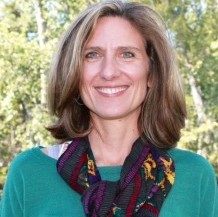 Stephanie Lenhart, Associate Professor, Boise State University (Moderator)
Stephanie is an Associate Professor in the School of Environment, the School of Public Service, and an affiliate of the Energy Policy Institute at Boise State University. She studies environmental and energy governance in the context of system transitions. Her research examines institutional design, social learning, policy implementation, and the negotiation of authority. Current projects explore regional power grid organizations, resource adequacy, community ownership of energy infrastructure, and the co-evolution of infrastructure, institutions, and landscapes. Her research has been funded by the U.S. National Science Foundation, the National Aeronautics and Space Administration, private foundations, and non-governmental organizations.

Jillian Hanson, Climate and Renewable Energy Program Manager, The Nature Conservancy
Jillian Hanson is the Climate and Renewable Energy Program Manager at The Nature Conservancy where she leads clean energy deployment efforts in Idaho. Her work focuses on building collaborative, equitable solutions with partners across the state to align climate action with conservation and community priorities. Jillian holds a Master of Environmental Management from Duke University and bachelor’s degrees in economics and film & media from American University. Prior to joining The Nature Conservancy, she was a leader in the youth climate movement, training hundreds of young organizers and directing a multi-state program that mobilized youth volunteers across five states during the 2018 midterm elections. Born and raised in Boise, Jillian enjoys spending long days exploring Idaho’s diverse natural landscapes.
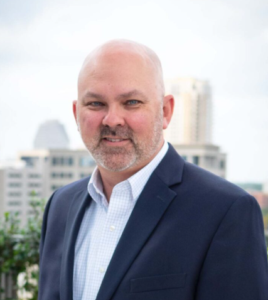
Brant Johnson, Senior VP of Development, Grid United
Brant Johnson is a Senior VP of Development at Grid United, an independent electric transmission development company. Brant provides strategic leadership for several of Grid United’s U.S. development projects in the Pacific Northwest to the Dakotas. With more than 25 years of experience as an energy professional, Brant has supported the development of major linear infrastructure projects across the US. Brant has deep experience managing regulatory, environmental, tribal, and landowner issues, and he employs an inclusive approach with project stakeholders to solicit meaningful feedback during project development.
Prior to joining Grid United, Brant led legal and technical teams at large companies supporting energy projects. He is active in environmental and land industry associations and has been an adjunct law professor teaching a course on energy regulation and NEPA. He received his bachelor’s degree in Zoology and is a licensed attorney in Texas and Montana, recently returning to Montana after working in Houston for 25 years.

Jamie Hearn, Climate and Community Planning Lead, Front and Centered
Jamie is the Climate and Community Planning Policy Lead at Front and Centered, where she focuses on transportation, land use, siting, and other planning work related to efforts to reduce greenhouse gas emissions and improve climate resilience. She has a background in environmental science and the intersections of environmental policy with tribal, land use, and administrative law. Her past experience includes working with frontline communities on developing climate justice advocacy campaigns and policies related to toxics remediation, flooding resilience, and air quality. Jamie received her Bachelor's in Environmental Science from UC Irvine and her Juris Doctorate from Seattle University School of Law.
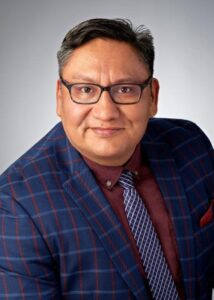
Donald Williams, Principal Consultant/CEO, From the Light Consulting
Donald Williams is an enrolled Umatilla Tribal Member, and Principal Consultant/CEO of From the Light Consulting, a Tribal member-owned energy consulting firm. Donald has been working in the energy sector for 10 years. During this time, he has gained valuable experience ranging from technical grant writing, project management, development, and consultation to tribal, state, federal agencies and NGOs. He is an advocate of renewable energy policy and Tribal Energy sovereignty in the Pacific Northwest Tribal communities. Donald has also performed as an Energy Advisor, Trade Ally manager, and Tribal Liaison with Energy Trust of Oregon, where he developed the Tribal strategic communication plan with Energy Trust of Oregon, worked with Diversity, Equity, and Inclusion, he is currently working to provide energy services and consultation to both Tribal and rural communities with From the Light Consulting.

Mike McArthur, Renewable Northwest
Mike was a Sherman County judge for more than a decade and Executive Director of the Association of Oregon Counties for 14 years. Additionally, he is a wheat and cattle farmer and has served on boards of numerous organizations. As Operating Partner of Frontier Advocates, he continues to participate in the development of public policy for rural Oregon. Mike is a graduate of Lewis and Clark College and received a BA Education Teaching certificate from Western Oregon University.
Session 2 (2:20 - 3 p.m.)
Opportunities to Expand the Transmission System
Many opportunities exist to expand the grid to meet future needs. Panelists will share about the utility and regional plans to expand our regional grid around three key strategies: optimizing the current grid, increasing capacity along existing corridors, and a small set of new projects that will reinforce the system and access the lowest cost resources available to meet our energy demands.

Shanna Brownstein, Head of Utility Partnerships, GridCARE (Moderator)
Shanna Brownstein is an energy industry veteran focused on helping companies work with utilities to accelerate clean technologies and optimize the grid. She is Head of Utility Partnerships at GridCARE, a company that uses AI to enable flexible interconnections and grid optimization for large loads like data centers. Prior to GridCARE, she worked at Tesla, a data-center developer, and spent 12 years at PNW utilities—first at NW Natural, focused on local and regional utility issues and environmental policies, and then at Portland General Electric where she worked on transportation electrification and grid resiliency.
She serves on the boards of the NW Energy Coalition and Oregon Adaptive Sports, is a certified whitewater rafting guide and enjoys hiking and skiing, eating good food, and hanging with her family. She received a masters degree in public administration from Columbia University in New York and a bachelor’s in government and international studies from Colby College in Maine.

Casey Baker, Senior Program Manager, GridLab
Casey manages GridLab's transmission program. As a 501(c)(3), GridLab provides technical support for public interest organizations and the power systems industry. Before joining GridLab in 2023, Casey spent over a decade in the utility industry working in a variety of roles including Transmission Planning, transmission interconnection contract management, Distributed Energy Resource Planning, and solar PV and microgrid site management. He has extensive experience in the western transmission system and is driven by GridLab’s mission to provide decision makers with independent information to expedite the expansion of the nation’s transmission system.
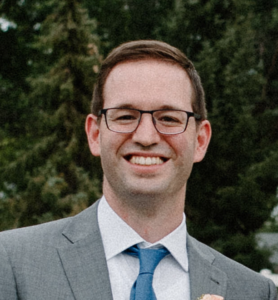
Hamody Hindi, Manager of Transmission Planning, Bonneville Power Administration
Prior to his current role, Hamody was supervisor for Line and Load Interconnections within the same group. From 2021 to 2023 he was on detail to the DOE Grid Deployment Office where he led a National Transmission Planning Study to identify high opportunity interregional transmission expansions across the country, including stakeholder engagement with technical, governmental and environmental groups. He has 17 years of transmission planning experience at BPA including leading engineering teams to develop transmission expansion plans to meet NERC reliability requirements, generation and large load interconnection requirements, and cross-disciplinary teams that include transmission planning, transmission operations, commercial, policy, legal experts. He has participated in a number of WECC and NERC working groups, including chairing the WECC Load Modeling Task Force from 2015-2017. Hamody holds a B.A. in Physics from U.C. Berkeley and an M.S.E.E. from University of Washington, Seattle. He is a registered Professional Engineer in the state of Washington.
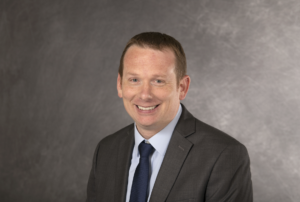
Curtis Westhoff, System Consulting Engineer, Idaho Power Planning Department
Curtis' primary focus areas include regional transmission planning and leading transmission planning study efforts for Idaho Power’s major transmission projects, including Boardman to Hemingway (B2H), Gateway West, and SWIP-North. He also supports transmission system modeling for Idaho Power’s Integrated Resource Planning process. Previously, Curtis worked as a Senior Engineer in Idaho Power’s System Protection Department, where he was responsible for design and coordination of protective relay systems and remedial action schemes. Curtis holds a Bachelor of Science in Electrical Engineering and a Master of Engineering in Electrical Engineering, both from the University of Idaho. He grew up in rural North Central Idaho in the Cottonwood area. He lives in Boise with his wife, Jess, and their two children. Outside of work, Curtis is an avid sports fan and enjoys hiking in the foothills and traveling with his family.
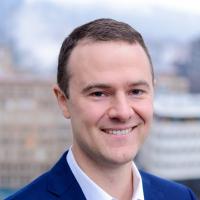
Kyle Unruh, Director, Montana & Idaho, Renewable Northwest
At Renewable Northwest, Kyle engages state legislatures, commissions, and coalitions to facilitate responsible development of transmission and generation. Kyle previously worked for NorthWestern Energy where he analyzed market options, quantified utilization of the transmission system in peak periods, and modeled flex ramp capability required to balance additional variable energy resources. Prior to his work in the energy industry, he advanced research projects at CU Boulder through proposal development, project management, and industry relations with partners such as Lockheed Martin and Ball Aerospace. After earning his MBA working with the University, Boulder City, and Boulder County to help meet their targets through deployment of renewable resources and energy efficiency, Kyle took an opportunity to help grow the research enterprise and propel the University of Montana to R-1 classification as Director of Sponsored Programs and Research Development.
Session 3 (3:50 - 4:50 p.m.)
Issues and Solutions Part 1: Community and Environmental Impacts and Siting Processes
Siting new transmission lines is where the rubber meets the road: balancing the need to expand our grid with impacts on communities whose lands and lives are impacted. The siting process is intended to identify and address these impacts while still resulting in new infrastructure builds. This session will review how the siting process works in each state, have panelists share from various stakeholder perspectives, and provide opportunity for the audience to share thoughts on how siting processes can continue to be improved.

Aaron Menenberg, Idaho Policy Manager, Renewable Northwest (Moderator)
Aaron Menenberg joined Renewable Northwest in January of 2025 and serves as the organization's Idaho Policy Manager. In this role Aaron works closely with legislators and state leaders on advancing development in Idaho’s energy system. Aaron has over a decade and a half of experience crafting, shaping, and securing state and federal public policy through legislative engagement, executive branch outreach, state ballot initiatives, public persuasion campaigns, and election work. Most recently, he designed and oversaw a successful constitutional amendment ballot initiative in Nevada. His work is informed by deep pragmatism and a passion for pursuing the public good. Aaron is an avid wine enthusiast and author of the Good Vitis wine blog and loves spending time outside with his wife and two Basenji dogs.

Shannon Stewart, Vice President of Environmental Compliance & Strategy, Invenergy
At Invenergy, Shannon oversees environmental permitting and compliance for transmission, geothermal, and energy generation projects across the United States. She brings more than 25 years of experience in the energy sector, with deep expertise in policy development, permitting of complex infrastructure projects, and stakeholder engagement. Shannon has held senior leadership roles at the U.S. Department of Energy, the U.S. Department of the Interior, and Southern California Edison. She is widely recognized as a leader in the energy and environmental fields.

John Robison, Public Lands and Wildlife Director, Idaho Conservation League
John has been working on public lands issues for ICL for the last 24 years. John served on the BLM's Resource Advisory Council subcommittee on the Gateway West transmission project in 2014. John has also had a leadership role in several land management collaboratives, including the Owyhee Initiative, the Boise Forest Coalition, and the Idaho Forest Restoration Partnership. John earned a BA in biology from Bowdoin College in Brunswick, ME. John started his graduate studies at the Teton Science School's Professional Residency in Environmental Education and completed his master’s degree from the University of Vermont’s Field Naturalist Program. When not advocating for Idaho's public lands and waters, he is out enjoying them with his two daughters and wonder dog Tiger Lily.

Reuben Martinez, Energy Program Manager, Affiliated Tribes of Northwest Indians
Reuben Martinez is a member of the Makah Nation. He holds a Bachelor’s degree in Economics from Western Washington University (2020) and a Master of Marine Affairs from the University of Washington (2024). His passion for climate resilience work started while at Northwest Indian College in Bellingham, Washington, where he began exploring Tribal strategic energy plans. This led him to a Policy Analyst position at Renewable Northwest, a renewable energy advocacy organization specializing in policy work, where he helped co-write the Tribal Solar Barriers Report.
Afterwards, Reuben worked at Spark Northwest as a Tribal liaison where he managed the Energy Transition Initiative Partnership Project (ETIPP), a federal initiative to help islanded communities with technical support. He was responsible for outreach and engagement with Tribes on the west coast, and for the development of strategic energy plans.
Reuben is committed to supporting Tribal Nations interested in energy initiatives and is eager to contribute his expertise to an organization that serves a diverse range of Tribal communities.
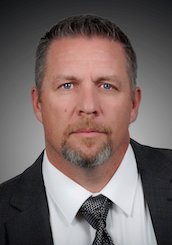
Jeff Hough, Bannock County Board of Commissioners
Jeff Hough was elected as a County Commissioner in 2020 and is serving his second term. Hough received his bachelor’s degree in Finance from Idaho State University and has worked for J.R. Simplot, 3Com, First Security Bank, and Idaho State University. He is a lifelong resident of Bannock County and is passionate about mountain biking, refereeing high school sports, and learning. He chairs the 5th District Elected Officials Association, the Intergovernmental Affairs Committee for Idaho Association of Counties, and is Vice Chair of the National Association of Counties Rural Affairs Subcommittee.
Friday, May 8
Session 1 (9:15 - 10:30 a.m.)
Issues and Solutions Part 2: Regional Planning and Coordination
Transmission is a regional infrastructure need; however, it is largely planned and paid for at the state level in the West. As regional planning rises in importance, stakeholders across the West are developing new tools and processes to increase coordination. Hear from a panel of speakers engaged in regional planning about evolving forums for regional collaboration and opportunities to engage.
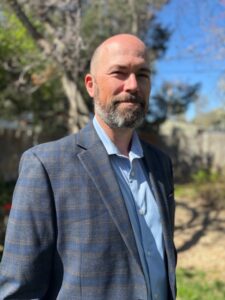
George Lynch, Western Interstate Energy Board (Moderator)
George serves as the Deputy Director at the Western Interstate Energy Board, providing leadership and support across WIEB’s various programs and committees. George previously worked for the Washington State University Energy Program, where he led transmission policy for the Washington State Energy Office. George has also served as Senior Advisor at the U.S. Department of Energy Grid Deployment Office, where he developed and led the wholesale electricity market program and worked on transmission policy and nuclear issues and also served as Legal Counsel at the Idaho Governor’s Office of Energy and Mineral Resources. George has a JD and M.A. in international affairs from American University, an LL.M. in international law from George Washington University Law School, and received his B.A. in political science from the University of California, Irvine.

Rich Glick, Gridworks
Rich is a Principal with GQS New Energy Strategies—a consulting firm co-owned with two former FERC colleagues, Pamela Quinlan and Liz Salerno. He previously served a five-year term as a Commissioner with the Federal Energy Regulatory Commission (FERC), where he chaired the Commission between January 21, 2021 and January 3, 2023. As Chairman, Rich initiated a number of key initiatives, including proposals to reform the planning and cost allocation process for electric transmission; expedite and enhance the generator interconnection process; improve the operation of organized electric capacity markets; and protect the reliability of the electric grid against weather-related, cybersecurity, and physical attack threats.
Prior to serving at FERC, Rich was the General Counsel for the Democrats on the Senate Energy and Natural Resources Committee, serving as a senior policy advisor on numerous issues, including electricity and renewable energy. Prior to that, he was Vice President of Government Affairs for Iberdrola’s renewable energy, natural gas storage, and electric and gas utility businesses in the United States. He ran the Company’s Washington, D.C. office and was responsible for developing and implementing the U.S. businesses’ federal legislative and regulatory policy advocacy strategies.
Rich previously served as a Director of Government Affairs for PPM Energy and prior to that he held the same position with PacifiCorp. He also served as a Senior Policy Advisor to U.S. Energy Secretary Bill Richardson, and before that was the Legislative Director and Chief Counsel to U.S. Senator Dale Bumpers, of Arkansas. From 1988-1992 Rich was an Associate with the law firm of Verner, Liipfert, Bernhard, McPherson and Hand.
He is a graduate of George Washington University and Georgetown Law. He and his wife Erin live in Alexandria, Virginia with their son.
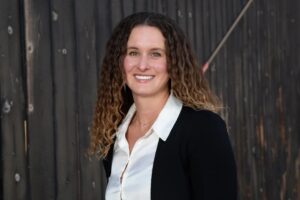
Caitlin Liotiris, Principal, Energy Strategies
Caitlin Liotiris is a Principal at Energy Strategies and a leading voice in shaping Western wholesale electricity markets and regional policy. With more than 15 years at the forefront of market design, policy, and advocacy, she drives strategies that help generation developers, states, utilities, and trade associations navigate—and influence—a rapidly evolving energy landscape.
Caitlin spearheads Energy Strategies’ market development and advocacy efforts, helping clients evaluate regional market participation options, navigate energy procurement, and translate new policies into actionable market strategies. She has played a leading role in landmark initiatives such as the “State-Led Market Study,” which united Western states in a neutral forum to assess market options, and was instrumental in a recent transmission cost allocation study that informed policy discussions across the region.
From the earliest days of developing the Western Energy Imbalance Market to today’s high-stakes debates over CAISO’s Extended Day-Ahead Market and SPP’s Markets+ expansion, Caitlin has shaped policy discussions that define how power flows across the West. Her expertise spans renewable integration, clean energy compliance, and market fundamentals — pairing deep technical skills with a big-picture policy perspective.
An active leader in regional market forums, Caitlin has served on the WECC Standards Committee, the Peak Reliability Member Advisory Committee, and currently contributes to Markets+ Transmission and Seams Working Groups. Since joining Energy Strategies in 2006, she has built a career bridging technical analysis and strategic advocacy to help clients succeed in a transforming grid and improving market outcomes in the West.
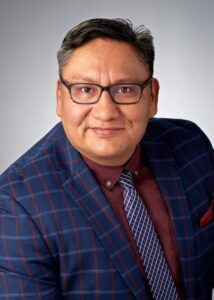
Donald Williams, Principal Consultant/CEO, From the Light Consulting
Donald Williams is an enrolled Umatilla Tribal Member, and Principal Consultant/CEO of From the Light Consulting, a Tribal member-owned energy consulting firm. Donald has been working in the energy sector for 10 years. During this time, he has gained valuable experience ranging from technical grant writing, project management, development, and consultation to tribal, state, federal agencies and NGOs. He is an advocate of renewable energy policy and Tribal Energy sovereignty in the Pacific Northwest Tribal communities. Donald has also performed as an Energy Advisor, Trade Ally manager, and Tribal Liaison with Energy Trust of Oregon, where he developed the Tribal strategic communication plan with Energy Trust of Oregon, worked with Diversity, Equity, and Inclusion, he is currently working to provide energy services and consultation to both Tribal and rural communities with From the Light Consulting.
Session 2 (10:50 a.m. - 12 p.m.)
Issues and Solutions Part 3: How Costs and Benefits are Determined and Allocated at the State Level
Who pays for, and who benefits from, our regional transmission lines? In the Northwest, each state has similar, but meaningfully different processes and standards for allocating costs and benefits to local utility customers. A moderated panel of utility commissioners will explore the differences between each state and help identify opportunities to increase coordination to ensure fair and accurate allocation of costs and benefits.

Megan Decker, Founder, Staircase Advisory (Moderator)
Megan Decker is an energy leader with over two decades of experience in public service, advocacy, and law. In 2025, she concluded two terms on the Oregon Public Utility Commission, where she served seven years as Chair and led the agency through major organizational and policy shifts. As co-chair of the Committee on Regional Electric Power Cooperation (CREPC), Megan led efforts advancing Western regional electricity markets, transmission, and resource adequacy.
Before her commission service, Megan worked as a lawyer for Renewable Northwest (focusing on utility commission advocacy), the Port of Portland (focusing on federal environmental law), and Ball Janik LLP (focusing on land use and real estate permitting). She is a graduate of Stanford University and the University of Washington School of Law, and served two years as a judicial clerk with the U.S. Court of Appeals for the Ninth Circuit.
Known for her clarity, collaborative leadership, and ability to guide high-stakes decision-making, Megan has built trusted relationships across utilities, advocates, states, and other stakeholders. In her consulting practice—independently as Staircase Advisory and in collaboration with AESL Energy Consultants—she provides strategic advice and guidance in the energy and utility space.
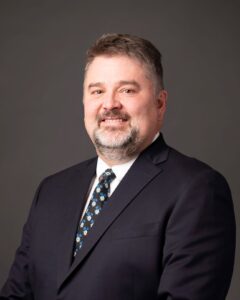
John Hammond, Idaho Public Utility Commission
Commissioner John R. Hammond, Jr. was appointed to his first term with the Idaho Public Utilities Commission by Governor Brad Little in January of 2022.
Prior to being appointed to the Commission, John worked for the Idaho Office of the Attorney General as a Deputy Attorney General and later as the Commission’s lead Deputy Attorney General. During his career, John also worked in private practice and was a partner at Fisher Pusch LLP in Boise for eight years.
John earned his Bachelor of Science from the University of Idaho and his Juris Doctorate degree from the University of Idaho School of Law.
Commissioner Hammond also serves on the National Association of Regulatory Utilities Commissioners (NARUC) Committee on Electricity.
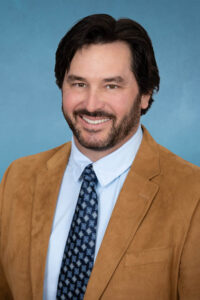
Les Perkins, Oregon Public Utility Commission
Les Perkins was appointed to the Oregon Public Utility Commission by Governor Tina Kotek in February 2024. Les has served as the President of the Western Conference of Public Service Commissioners, and currently serves as Oregon’s representative on the Committee on Regional Electric Power Cooperation Transmission Collaborative and FERC Order 1920 Working Group.
Prior to his appointment, Commissioner Perkins represented the rural south end of Hood River County as a Hood River County Commissioner for nearly 24 years. While serving as a Commissioner, Perkins represented Hood River County on the board of the Community Renewable Energy Association where he served as Chair. Perkins also served in leadership roles with the Association of Oregon Counties, most recently as Co-Chair of the Natural Resources Legislative Committee, which included energy. Perkins was a longtime member of the Hood River Energy Council which developed an energy plan for Hood River County. Additionally, he gained expertise in energy and water utility management as general manager of the Farmers Irrigation District, which owns and operates two in-conduit hydropower facilities. Commissioner Perkins was also co-founder of Farmers Conservation Alliance, a non-profit focused on finding resource solutions for rural communities, specifically around energy and water.
Commissioner Perkins holds a Bachelor of Science in Biology from Lewis and Clark College.
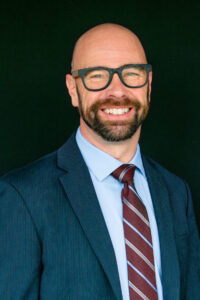
Chair Brian Rybarik, Washington Utilities and Transportation Commission
Gov. Bob Ferguson appointed Brian Rybarik chair of the Utilities and Transportation Commission in January 2025.
Brian is a member of the National Association of Regulatory Utility Commissioners' Electricity and Critical Infrastructure Committees, Committee of State Representatives for the Western Resource Adequacy Program, and Federal and State Current Issues Collaborative. Gov. Ferguson also appointed Brian to serve on the Washington State Office of the Chief Information Officer Technology Services Board.
Before the commission, Brian held various leadership roles at Microsoft, including leading a team focused on protecting the rights of people in Microsoft’s supply chains. He also served as chief of staff for Microsoft’s corporate sustainability team and was part of Microsoft’s data center energy team.
Brian has also been the vice president of policy for the Clean Grid Alliance and deputy general counsel at MidAmerican Energy Company. Before MidAmerican, he was a director at the Midcontinent Independent System Operator and division administrator and policy advisor at the Public Service Commission of Wisconsin.
Brian started his legal career in private practice at the law firm Michael Best and has also worked in the Wisconsin Legislature. He earned his bachelor’s and law degree from the University of Wisconsin-Madison.
Session 3 (1 - 1:50 p.m.)
Issues and Solutions Part 4: Workforce and Construction
Even if the political and financing challenges to building transmission were addressed, do we have access to the right people and materials required to “put steel in the ground?” This session will investigate the key supply chain and workforce development challenges that face the region, and we’ll hear from speakers engaged in creative opportunities to address them.

Kate French, Senior Policy Manager, Power Sector, Blue Green Alliance (Moderator)
Kate's advocacy work began in 2010 with a focus on Western rural resilience: coal mine and power plant remediation, sustainable community agricultural practices, and electric cooperatives' access to renewable electricity. She continues to partner and work alongside diverse stakeholders across the region, including workers, labor unions, climate advocates, and ratepayer coalitions. Kate joined BlueGreen Alliance in 2021 where she supports BGA’s state work on power sector policy issues, including transmission and grid expansion that creates high-quality jobs and a clean energy future.
Kate earned her BA from the University of Colorado and her Master of Public Administration degree from Montana State University. She is based in Livingston, Montana.
Jake Pollack, Senior Director, Strategy & Impact, Strategic Energy Innovation
Jake leads the strategy team at SEI including the core functions of fundraising, expansion efforts, and defining and measuring SEI’s impacts year after year. Before joining SEI, Jake worked at the University of Oregon running a professional certificate in Sustainability Leadership for mid-career professionals. He also served as adjunct faculty in the Public Policy, Planning and Management department, guiding graduate students through an applied interdisciplinary program covering climate resilience and environmental justice.
Previously, Jake has worked in international settings in higher education, mentoring and training students in aspects ranging from cross-cultural communication to organizational transformation. His Ph.D. research examined interdisciplinary and collaborative models of sustainability and a new triple bottom line of resilience, integrity, and commitment. His career began in ecovillages and grassroots centers of innovation. He is now a leader in national scale climate initiatives and cultivating cross-sector platforms for professionals who wish to accelerate and incubate projects that address our most significant community resilience challenges.
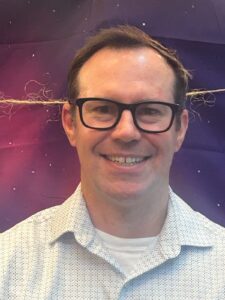
Erich Orth, Bonneville Power Administration
After graduating from Washington State University in Civil Engineering, Erich started with BPA in 1999 and worked his way through various design organizations and up through project management the last 18 years. He currently manages BPA’s Secondary Capacity Model program delivering large capital projects through a combination of Owner’s Consultant and Engineer-Procure-Construct contracts. The program focuses on system expanding projects, including multiple new 500kV substations.
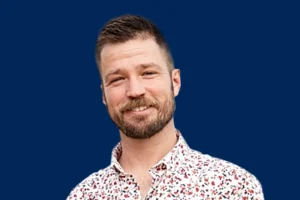
Jason Hudson, Government Affairs Director, IBEW 77
Jason Hudson is the Government Affairs Director for the International Brotherhood of Electrical Workers (IBEW), Local 77. IBEW Local 77 represents almost 9000 utility and high voltage electrical workers across Washington, north Idaho, and northwest Montana. He lobbies on behalf of Utility Workers in Olympia, Boise, Helena, and Washington D.C. and works with state agencies to craft policies to keep workers safe and keep the energy grid functioning. Local 77 is headquartered in SeaTac, Washington, with offices in Spokane and Kennewick; Jason splits his time between Spokane, WA and Boise, Idaho. Prior to joining Local 77, Jason was the Political Director for the Idaho AFL-CIO. He graduated with a degree in Political Science from the University of Georgia and a Law degree from the University of Colorado. Jason spends his free time hiking with his wife, Erin, and their two dogs, Penny and Asher, running, skiing, rock climbing, and occasionally disappearing into a canyon in his raft.
Session 4 (2:15 - 3 p.m.)
Next Steps to Achieve Our Prosperous Future
How can we move forward to build upon our shared transmission system, meet our growing needs, and address the real impacts on communities and the environment? In this concluding session, we will summarize the information, perspectives, and potential solutions that came out of the conference sessions, solicit additional audience ideas on how to move forward, and identify opportunities for further engagement.
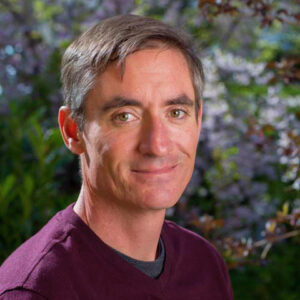
Ben Otto, Senior Policy Associate, NW Energy Coalition (Moderator)
Ben Otto has been engaged with the NWEC for many years as a former board member and now as a Senior Policy Associate. Based in Boise, Idaho, he spent a decade representing a local non-profit in utility planning forums and regulatory proceedings. Along with energy work, Ben has served on the Board of Directors of the NW Energy Coalition, Renewable Northwest, the Idaho Clean Energy Association, and the NW Energy Efficiency Alliance. Ben holds a Juris Doctorate from Lewis and Clark Law School, a Master of Studies in Environmental Law from Vermont Law School, and a B.A. in Outdoor Experiential Education from Prescott College, where he developed his true passion for exploring the wilds of the West.
Thank You to Our Community Partners
Clean Energy Transition Institute
Climate Solutions
Community Energy Project
Conservation Northwest
Front & Centered
Idaho Conservation League
Idaho Rivers United
Montana Environmental Information Center
Sierra Club, Idaho Chapter
Sierra Club, Washington Chapter
Snake River Alliance
Sustainable Northwest
The Nature Conservancy
Washington Conservation Action