
9 a.m. - 5 p.m. Wednesday, December 3
Smith Memorial Student Union | Portland State University
Register Now!
Meet Our Fall 2025 Conference Panelists
Panel 1: Building Climate Ready Communities—Extreme Weather Resilience and Utility Preparedness
Climate change is increasing the frequency and severity of extreme weather events, from wildfires to ice storms. This panel will look at how utilities and communities can work together to reduce extreme weather risks, strengthen local energy projects, and maintain access to essential services during emergencies. Panelists will share approaches to balancing investments in clean energy goals with system planning that supports community resilience and public safety.
Moderator: Alessandra de la Torre, NW Energy Coalition
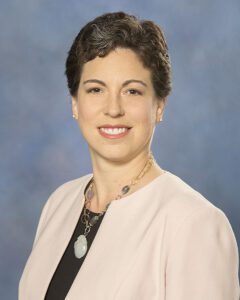
Letha Tawney, Chair, Oregon Public Utility Commission
Letha Tawney was appointed to the Oregon Public Utility Commission by Governor Kate Brown in June 2018 and appointed to the position of Chair in June 2025. Commissioner Tawney represents Oregon on the Electricity and the Critical Infrastructure committees for the National Association of Regulatory Utility Commissioners (NARUC). She also serves on the Energy Trust of Oregon Board of Directors, and as Chair of the Energy Imbalance Market Board of State Regulators (EIM-BOSR), engaging closely on Western electricity market development in several forums.
Prior to her appointment, Commissioner Tawney was an expert on electric utility business models, state regulation, clean energy development, and large customer buying strategies for World Resources Institute (WRI). As the WRI Polsky Chair for Renewable Energy, she propelled innovation in business and regulatory models in the power sector. Commissioner Tawney has a deep understanding of the constraints and interests driving both utilities and their customers as technology creates large-scale change in the sector.
Commissioner Tawney holds a Master’s of Public Administration from the Harvard Kennedy School.
 Silvia Tanner, Senior Energy Policy and Legal Analyst, Multnomah County Office of Sustainability
Silvia leads the County’s efforts to catalyze a just energy transition. She spent years working to advance clean energy through policy and regulatory advocacy at federal agencies and state utility commissions through the Pacific Northwest. At Multnomah County, Silvia combines that experience with her lived experience to collaborate with community leaders and advocates to advance an energy transition that lifts up, rather than penalizes, vulnerable populations.
A proud Latina and immigrant from Colombia, Silvia has a rich history of service to community. She works to improve the experience of people from systemically excluded backgrounds in the legal and environmental fields through her service in various boards and her enthusiastic mentorship of students and professionals of color. She serves in the Environmental Quality Commission for the Oregon Department of Environmental Quality, the Oregon Department of Energy’s Energy Advisory Workgroup, the Energy Trust of Oregon’s Board of Directors, and the Oregon Hispanic Bar Association. Silvia holds a JD from Lewis and Clark Law School and a BA in Economics from Portland State University. She is her happiest when with her family and friends, and enjoys reading, dancing, cooking, and running.
 Soledad Molina, Energy Justice Leaders Program
Soledad Molina Neri is number 12 in her family, originally from the state of Guerrero, Mexico. She is 45 years old and the mother of four children and two dogs. She is a homemaker and sometimes sells tamales. Soledad belongs to the Energy Justice Leaders group facilitated by NWEC and other organizations, and she is also a Community Health Promoter with the Oregon Health Authority. She loves to cook, dance, play basketball, and above all, learn how to help herself improve and be well in all aspects so that she can teach her children and community.
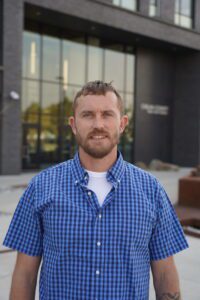
Whitney Machado, Wildfire Program Manager, Chelan County PUD
Whitney serves as the Wildfire Program Manager at Chelan County PUD, bringing more than 23 years of experience in wildland fire suppression and wildfire mitigation with the federal government. Before joining the PUD, he worked with the Bureau of Land Management, U.S. Fish and Wildlife Service, and U.S. Forest Service, where he gained extensive experience in fire operations, community protection, and interagency collaboration.
In his role at Chelan PUD, Whitney is focused on building upon the District’s strong wildfire mitigation foundation while advancing proactive strategies to protect customers, communities, and critical infrastructure from the increasing threat of wildfire. Drawing on decades of field and leadership experience, he aims to strengthen partnerships, enhance coordination, and guide future mitigation efforts that align with industry best practices and evolving environmental challenges.
Whitney earned his bachelor’s degree in Natural Resources from Washington State University. He and his wife, Sarah, live in Cashmere, Washington, with their two sons, Graydon and Auckland. Together, they enjoy spending time outdoors and exploring new places as a family.
Panel 2: Wired for the Future—Transmission Planning for a Modern, Reliable Grid
Modernizing the Northwest’s transmission system is essential for meeting clean energy goals and ensuring reliable service. This panel will review recent efforts to plan for and improve transmission. Panelists will discuss what is needed, where upgrades are most critical, and how state and Tribal leadership can help guide these conversations early, before specific new transmission lines are proposed.
Moderator: Zachariah Baker, NW Energy Coalition
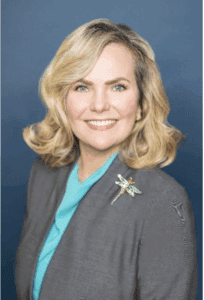
Sarah Edmonds, President and CEO, Western Power Pool
Sarah was selected in 2022 to be President and CEO of Western Power Pool (WPP). WPP is a nonprofit corporation that helps coordinate electric grid operations and grid planning for the western United States and Canada. The WPP supports the activities of the Northwest Power Pool, which includes major utilities, generators, and energy managers who together work for increased grid efficiency and reliability, including WPP’s administration of the regional resource adequacy program (WRAP), which seeks to enhance and increase reliability for entities across the footprint, and facilitation of the Western Transmission Expansion Coalition (WestTEC), a west-wide transmission planning initiative.
Prior to joining WPP, Ms. Edmonds spent nearly 11 years with PacifiCorp, starting as legal counsel, moving to director of transmission, before being named VP and general counsel. She moved to PGE in 2018 where she served as director of transmission and reliability. In these roles, she was responsible for development of strategy and policy recommendations relating to market expansion, regional resource adequacy development, emerging regional and national wholesale policy initiatives, and transmission planning, expansion and cost recovery.
 Oregon State Representative Mark Gamba
During his career as an editorial photographer, Mark was sent around the world to capture images of exciting adventures and beautiful locations. Decades ago, he was seeing undeniable signs of increasing drought, bleaching coral reefs, melting glaciers, significant weather disturbances, and other indicators of climate change across the globe. In spite of very clear warnings from the scientific community, he saw governments and businesses doing virtually nothing to address the impending threat.
Climate change was the core reason Mark first ran for Milwaukie City Council and it remains his top motivator to this day. During his eight years as Mayor of that city he championed causes ranging from urban tree canopy protections, to advancing racial justice in the city bureaucracy, to building out bike and pedestrian infrastructure, and more.
Mark is one of the few renters currently serving in the Oregon State Legislature and he is of modest means. These perspectives inform his policy positions and he strives to keep poor and working-class families centered in his lawmaking at all times.
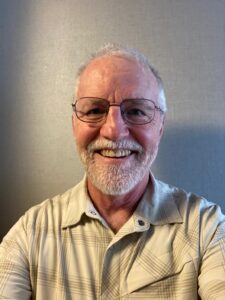 Doug Howell, NGO Coordinator on Transmission
Doug has worked in energy policy and related coalitions for over 30 years including the U.S. Senate, the California Energy Commission, the Energy Conservation Coalition, the Environmental and Energy Study Institute, Seattle City Light, King County, National Wildlife Federation and Sierra Club. Three years ago, Doug shifted to consulting for Northwest environmental organizations and the BlueGreen Alliance focusing on the Bonneville Power Administration and transmission issues. Doug is currently contracting with the Energy Foundation to help coordinate transmission advocacy in the West.
Panel 3: Powering Growth Responsibly—Meeting the Region's Rising Energy Demand
Electricity demand in the Northwest is projected to grow faster than ever, raising questions about how to keep power reliable, affordable, and low-carbon. This panel will explore strategies for making the most of our existing infrastructure while adding new generation and transmission, managing costs for customers, and meeting state carbon reduction targets. Panelists will also discuss the roles of thermal generation, energy efficiency, demand management, distributed resources, and new renewables in meeting peak demand.
Moderator: Lauren McCloy, NW Energy Coalition
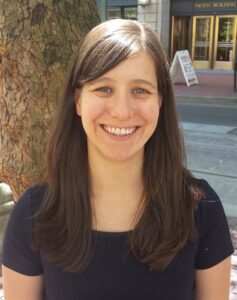 Jennifer Light, Director of Power Planning, Northwest Power and Conservation Council
Jennifer Light has been the Director of Power Planning for the Northwest Power and Conservation Council since 2022. Under the NW Power Act, the Council’s power planning mission entails creating a 20-year plan to assure the Northwest an adequate, efficient, economical, and reliable power supply. Light leads a team of power system analysts, coordinates with regional partners across the Pacific Northwest, and oversees the Council’s multi-year power planning cycles. Light joined the Council in July 2014 as the Manager of the Regional Technical Forum, an advisory committee to the Council focused developing robust energy efficiency savings estimates for the region. She entered the energy field in 2008 working for the Consortium for Energy Efficiency.
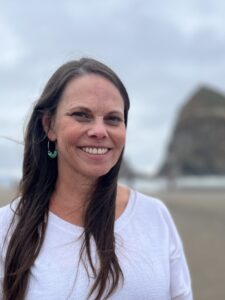 Christine Golightly, Attorney, Columbia River Inter-Tribal Fish Commission
Christine Golightly is an attorney with the Columbia River Inter-Tribal Fish Commission with historical focus on the operations of the Columbia River System and assuring those operations adequately protect and restore anadromous fish. With the regional energy transition, Chris broadened her focus to help develop the 2022 Energy Vision for the Columbia River Basin, which provides recommendations for a tribal and fish-friendly energy transition. Since publication, she has been key to coordinating the Vision’s distribution and implementation and has become more active in the regional energy transition conversation. Chris has a B.S. in Ecology and Evolutionary Biology from the University of Arizona and a J.D. with a Certificate in Environmental Law from Lewis and Clark College.
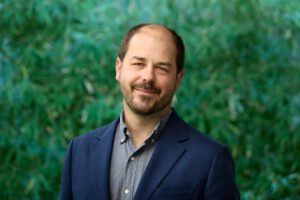 Brad Cebulko, Partner, Current Energy Group
Brad is a nationally recognized expert in utility regulation. He has submitted expert witness testimony and comments on a wide range of electric and gas utility issues including cost of service, rate allocation and rate design, low-income ratepayer issues, performance-based regulation, long-term resource planning, capital investment planning, plant prudency, and utility decarbonization policy.
Prior to co-founding Current Energy Group, Brad was a Senior Manager at Strategen Consulting where he led the Gas Transition practice and worked with clients across the country on a range of regulatory issues. Brad also worked at the Washington State Utilities and Transportation Commission (UTC) for 8 years as both a regulatory analyst and as an advisor to the commissioners. From 2019 – 2021, Brad led the UTC’s rulemakings to implement the Clean Energy Transformation Act, the state law requiring electric utilities to achieve 100 percent carbon free electricity by 2045.
Brad has a Masters in Public Administration from the University of Washington, and earned his bachelor’s degree in Political Science from Colorado State University.
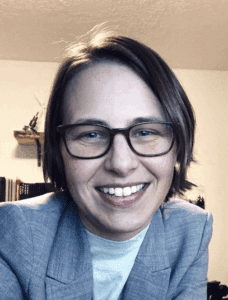 Elaine Hart, Co-Founder and Principal, Sylvan Energy Analytics
Elaine co-founded Sylvan Energy Analytics and leads the company's consulting practice. She brings 15 years of experience in clean energy system planning, with expertise spanning integrated resource planning, resource adequacy, complex resource valuation, and clean energy policy design and implementation. Dr. Hart has driven innovation in resource planning and decarbonization strategy from within a major investor-owned utility and has advised state agencies, utilities, non-profits, and developers on the challenges and opportunities presented by the transition to cleaner energy systems.